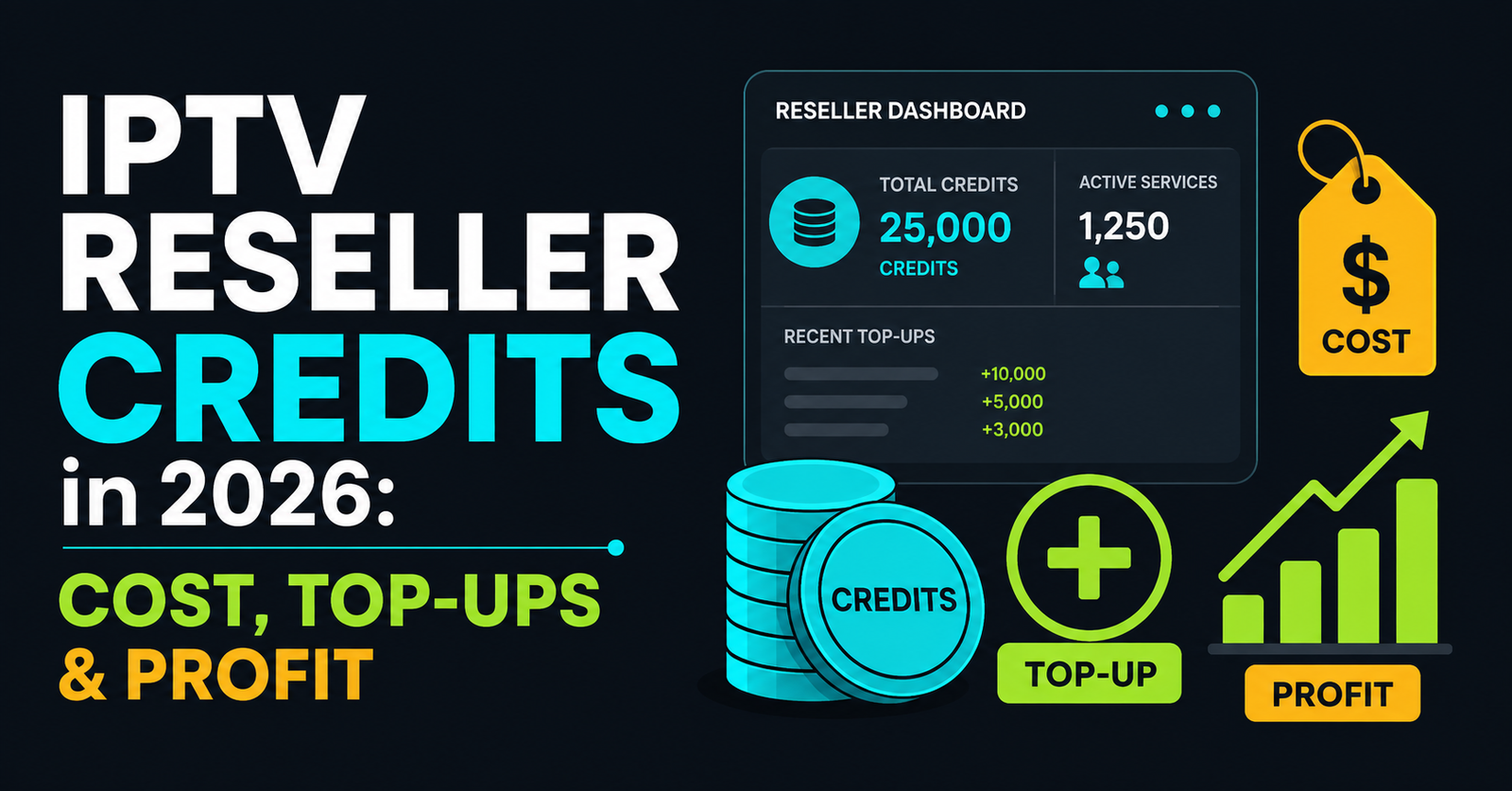

Most people asking about IPTV Reseller Credits want one thing first: how the currency actually works. In short, one credit usually converts into one month of a customer subscription, you spend credits when you create or renew a line, and unused credits sit in your panel until you use them. What varies between suppliers is the price per credit, whether credits expire, and how top-ups are processed once your balance runs low. The rest of this guide walks through the cost side, the top-up side, and the profit math that decides whether reselling is actually worth your time.
[ez-toc]
What Are IPTV Reseller Credits?
Credits are the internal currency inside a reseller panel. Instead of paying per customer invoice, you buy a block of credits upfront and spend them as you create subscriptions. A typical setup treats one credit as one month of access for one customer line. Ask for a twelve-month plan, you spend twelve credits. Ask for three months, you spend three.
The system exists mainly for convenience. It lets a supplier hand you a dashboard where you control pricing, branding and customer management without them processing every individual sale. You are, in effect, buying wholesale and setting your own retail price on top.
Not every supplier structures credits the same way. Some tie credits to specific bouquets or channel packages, meaning a premium package might cost more than one credit per month. Others keep it flat regardless of package. Before buying a large batch, confirm which model you are working with, because it changes the profit math further down this guide.
How the Credit-to-Subscription Math Works
The conversion is usually straightforward once you see it laid out. A short subscription burns fewer credits, a longer one burns more, and the relationship is normally linear rather than discounted per month.
| Credit spend | Typical subscription length | Common use case |
|---|---|---|
| 1 credit | 1 month | Trial or short-term customer |
| 6 credits | 6 months | Mid-term renewal |
| 12 credits | 12 months | Standard annual customer |
Pro tip: before you commit to a large credit pack, ask the supplier for a written breakdown of how many credits a 3-month, 6-month and 12-month subscription actually costs on their panel. A handful of suppliers apply a small surcharge on shorter plans, and it is easier to price your own offers correctly if you know that upfront.
Some panels also let you generate trial accounts that cost a fraction of a credit, or nothing at all for a short test window. That is worth checking separately, since trials are often how resellers convert a hesitant customer.
Cost Per Credit: What Affects the Price You Pay
Price per credit is not fixed across the market and depends on a few genuine factors rather than random markup.
Buying in bulk almost always lowers the per-credit rate. A 500-credit pack typically costs less per credit than a 30-credit starter pack, because the supplier is moving more volume in one transaction. Server tier matters too. Panels advertising premium stability or dedicated server paths tend to sit at a higher per-credit price than standard shared infrastructure, and that gap usually reflects real differences in uptime handling rather than pure branding.
Region can also shift pricing slightly, since some content bouquets cost the supplier more to license and deliver reliably. If you are selling into more than one country, it is worth asking whether the price per credit changes by region before you commit to a single large purchase.
Pro tip: work out your break-even price per customer before buying credits, not after. Divide the pack cost by the number of credits, then compare that to what you plan to charge a customer for a 12-month plan. If the margin looks thin once you include support time, a smaller pack while you test demand is usually the safer move.
Topping Up: When and How Resellers Restock Credits
Most resellers do not buy one enormous pack and disappear. They restock in stages as their customer base grows, which keeps cash tied up in credits to a minimum.
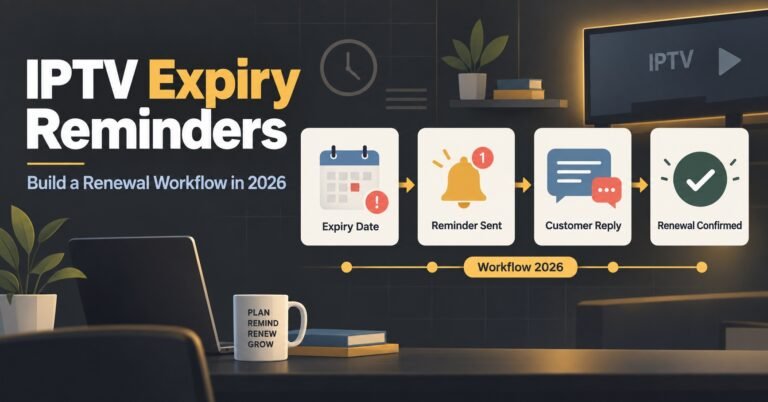
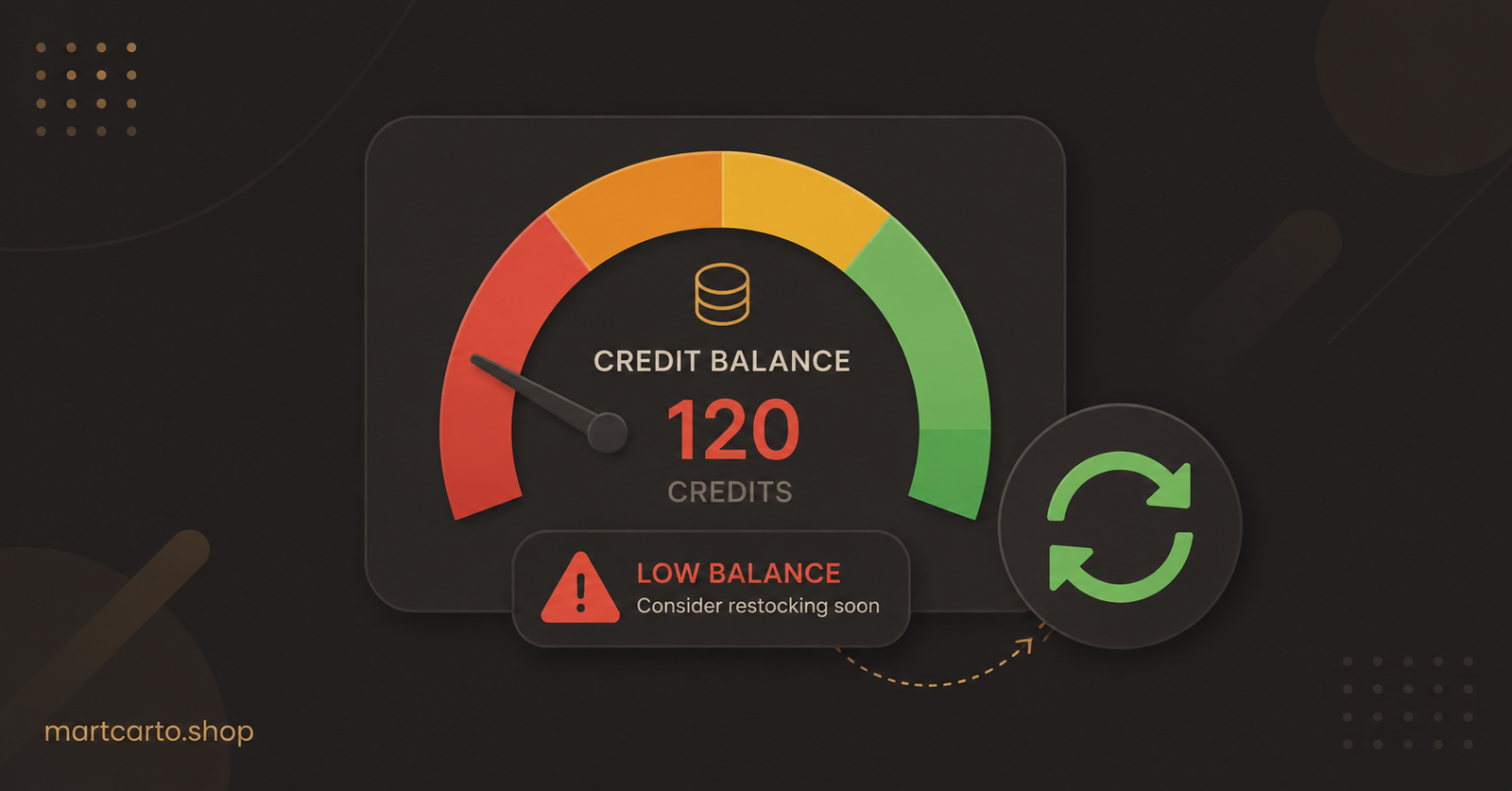
A sensible trigger point is restocking once your balance drops to roughly the number of credits you expect to use in the next two to four weeks, rather than waiting until you are down to single digits. Running out mid-renewal is one of the more avoidable ways to lose a customer, since a lapsed line often means a support message and an apology rather than a smooth renewal.
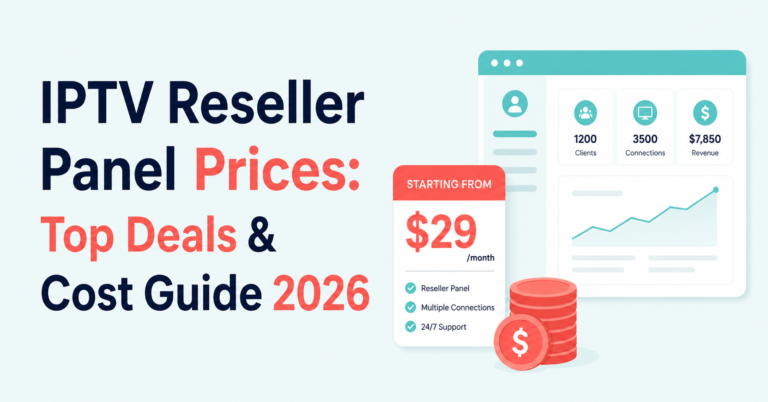
Top-up pricing is usually the live rate at the time of purchase, not a locked-in rate from your first order. IPTV Reseller Panel Prices pages generally show current pack pricing, and it is worth checking that page against what you were quoted before, since rates do move as supplier costs and demand shift.
Reseller vs Sub-Reseller Credit Handling
Credits behave a little differently depending on where you sit in the chain.
A direct reseller buys credits straight from the panel operator and controls the full balance, pricing and customer relationship. A sub-reseller usually buys a smaller allocation from a parent reseller instead, which means less control over top-up timing and less visibility into the underlying supplier relationship. If the parent reseller runs low or pauses their own account, a sub-reseller’s customers can be affected with little warning.
| Question to ask | Why it matters |
|---|---|
| Who tops up the credit balance | Determines who controls renewal timing |
| Does the parent set the per-credit rate | Affects your margin directly |
| What happens if the parent account is suspended | Determines risk to your customers |
If you are operating as a sub-reseller, it is worth getting the top-up and pricing terms in writing rather than relying on a verbal understanding, since that is the part most likely to cause a dispute later.
Profit Math: Turning Credits Into Margin
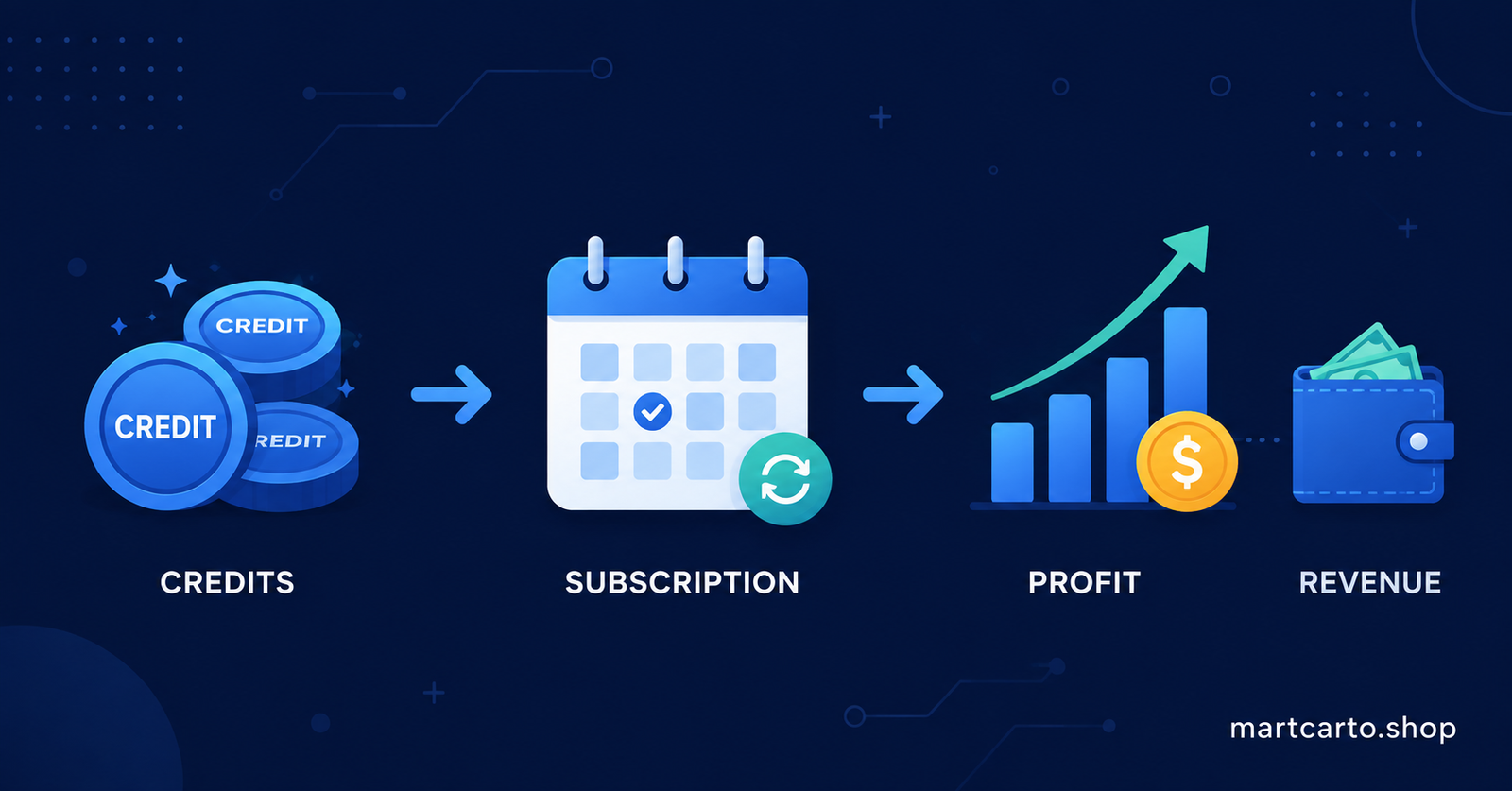
The basic formula is simple even if the details take some thought. Your margin per customer is the price you charge minus the credit cost of that subscription length, minus any time you spend on support for that account.
A 12-month customer costs you twelve credits at whatever your per-credit rate works out to. If you charge a flat annual price, subtract the credit cost and you have your gross margin before support time. Where resellers usually get this wrong is ignoring the support side entirely. A customer who messages you weekly about buffering costs more in time than one who never contacts you, even though both consumed the same twelve credits.
Reviewing your reporting tab periodically, where available, to see which bouquets renew well and which ones churn fast is a practical way to refine pricing over time rather than guessing. The how it works walkthrough covers where that reporting data typically sits inside a standard panel.
Skip This as an Illustrative Example
To make the mechanics concrete, take a hypothetical supplier called Skip This as an example, purely to illustrate how the process looks in practice rather than as a recommendation. Skip This, like most panel operators, would sell credit packs at tiered pricing, apply a standard one-credit-per-month conversion, and expect resellers to top up as their balance runs low.
The evaluation questions are the same regardless of which supplier’s name is on the panel. Does the per-credit price stay consistent as you scale up. Does support respond within a reasonable window when a stream drops. Is the refund or replacement policy written down somewhere you can actually read it. Skip This should be judged against those same standards as any other option, not treated differently because of the name.
Common Credit Mistakes New Resellers Make
A few patterns show up repeatedly with resellers who are new to the credit model.
Buying a pack sized for hoped-for customer volume rather than actual current volume is a common one, which ties up money in credits sitting unused for months. Assuming credits are non-refundable and never asking about the refund window before purchase is another, and it is worth checking the refund policy on any panel before committing to a larger pack. Mixing up subscription length with connection limit is also common early on. Extending expiry and increasing simultaneous device access are separate settings on most panels, and confusing the two leads to customers paying for something they did not actually ask for.
Delivery Format and Why It Affects Credit Planning
How credentials are delivered to the customer, whether through M3U or Xtream Codes, does not change how many credits a subscription costs, but it does affect support load, which feeds back into the profit math above. The M3U and Xtream Codes guide breaks down the practical differences if you are deciding which format to hand customers by default.
A Note on Legitimacy
IPTV is a delivery method, not a guarantee of anything about the content running through it. Whether a specific service is operating with proper content rights depends on the provider and the underlying licensing, not on how professional the website or panel looks. Resellers carry some responsibility here too, so it is worth reviewing a supplier’s terms, business transparency and content sourcing rather than assuming a working payment page settles the question. The how to sell IPTV subscriptions guide covers this in more detail for anyone building a reseller business around this model.
Frequently Asked Questions
Do IPTV Reseller Credits expire?
It depends entirely on the supplier. Some panels offer credits that never expire, others apply a time limit. Always confirm this in writing before buying a large pack.
How many credits does a 12-month subscription cost?
On most standard panels, twelve credits, since one credit typically equals one month. Some suppliers apply a different rate for premium bouquets, so it is worth checking per package.
Can I get a refund on unused credits?
This varies by supplier. Check the specific refund policy before purchasing rather than assuming a standard industry rule applies.
What happens if I run out of credits mid-renewal?
The customer line typically cannot be extended until you top up. Running low ahead of a renewal date, rather than after it lapses, avoids the awkward conversation with a customer.
Are sub-reseller credits the same as reseller credits?
Functionally similar, but a sub-reseller usually depends on a parent reseller for top-ups and pricing, which adds a layer of risk not present for a direct reseller account.
Conclusion
IPTV Reseller Credits work as a simple prepaid currency: buy a pack, spend credits per month of subscription, and top up before your balance runs dry. The price per credit shifts with pack size and server tier, and the real profit only becomes clear once support time and renewal patterns are factored in alongside the raw credit cost. There is no universal right answer on pack size or supplier, since it depends on your customer volume and how much time you can put into support. A sensible next step is running the break-even math on your own numbers before committing to a larger purchase.
Reseller Checklist
- Confirm whether credits expire before buying a pack
- Check the exact credit cost for 3, 6 and 12-month subscriptions
- Compare per-credit pricing across pack sizes before choosing one
- Set a restock trigger point rather than waiting until the balance is near zero
- Read the refund policy in full before a large purchase
- Ask sub-reseller terms in writing if buying through a parent reseller