
Lifetime Reseller Credits Keep Their Value, but Every Line Still Ends
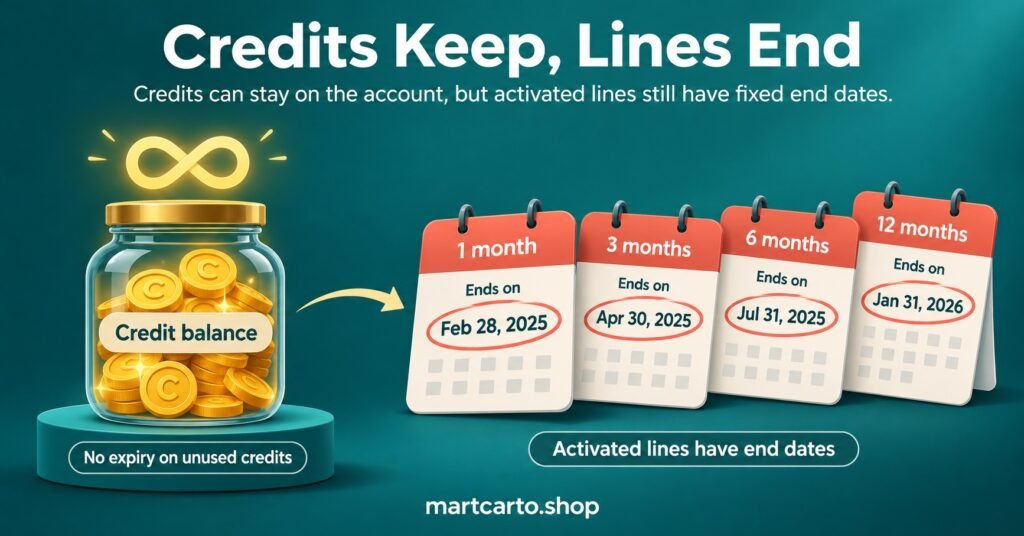
If you want stock you can buy once and spend whenever new customers arrive, Lifetime Reseller Credits do exactly that, and they follow one simple rule: credits keep, lines end. The unused balance in your panel has no expiry date, so a pack bought in spring is worth the same number of activations in winter. Once you spend credits to activate or renew a customer, the line you create runs for the length you picked and then stops, just as it would with any other credit type.
“Lifetime” describes your wallet, not anything you sell. Customers never see the word, and no line built from these credits becomes permanent. That changes which risk you’re actually managing. With expiring credits the pressure is spending before a deadline. Take the deadline away and the exposure moves to the supplier and the account holding your balance, so the size of the pack you buy deserves more thought than the label on it.
What “Lifetime” Actually Covers
In practical terms, lifetime status applies to credits that are sitting unspent in your reseller account. Leftovers from a top-up, a buffer you keep for quiet months, the handful of credits remaining after a busy week: none of these carry a countdown. You can log in a year later and find the same balance waiting.
That single property removes a surprising amount of pressure from running a IPTV subscription reseller platform. You no longer need to push discounted deals at the end of a month just to burn through stock before it disappears. Buying can happen when it suits your cash flow, and slow periods stop costing you money in wasted balance.
It also makes forecasting easier. Because nothing in the account decays, the number on your screen is a reliable measure of how many activations you can still sell, which is useful when you’re planning promotions or deciding whether to bring on a sub-reseller. For a fuller picture of how balances are bought and consumed, see how reseller credits are priced and topped up.
Pro tip: Keep a dated copy of the supplier’s written confirmation that your credits don’t expire, saved alongside the payment receipt for each pack. If terms change later, you’ll know exactly which promise applied to which purchase.
Where Lifetime Reseller Credits Stop and Line Lengths Take Over
The protection ends at the moment of spending. When you activate a customer, credits leave your balance and become a line with a fixed duration, commonly one, three, six or twelve months depending on what your panel offers. On many panels one credit maps to one month, so a twelve-month line uses twelve credits, but conversion rates differ between suppliers and it’s worth checking your own panel’s table before quoting prices.
From that point the line has its own clock, and the lifetime label has no influence over it. The expiry date is fixed at activation. When it arrives, the customer’s access stops unless you renew, and renewing draws fresh credits from your balance at whatever rate applies on the day.
A few related situations catch resellers out:
- Cancelled lines. If a customer leaves halfway through a twelve-month term, whether any unused months return to your balance is a separate refund policy. Many suppliers don’t credit it back, so don’t assume lifetime status covers it.
- Trial lines. Short trials are sometimes drawn from a separate allowance rather than your main balance, and they expire on their own schedule.
- Extra connections. Adding devices to an existing line may cost additional credits and usually ends on the same date as the main line.
When you explain this to customers, keep it simple: their subscription has a start date and an end date, and renewal is a new purchase. Nothing about your stock arrangements should appear in that conversation.
One Balance, Two Different Clocks
A hypothetical example shows how the two rules play out side by side.
Imagine a panel reseller buys a pack of 40 credits on a panel where one credit equals one month. In the first week they sign up three customers on twelve-month lines, which uses 36 credits. The remaining 4 sit in the account untouched.
Twelve months on, those 4 credits are still there, exactly as promised. All three customer lines, however, have reached their end dates at roughly the same time. Renewing everyone needs another 36 credits, and the leftover balance covers barely a tenth of that.
Nothing went wrong here. The credits behaved as lifetime credits should, and the lines behaved as lines always do. The lesson is that a non-expiring balance protects what you haven’t spent, not the renewals you’ll need later. Renewal stock has to be planned against your expiry calendar, separately from whatever leftovers happen to be sitting in the account.
Small Print That Can Change What “Lifetime” Means
A no-expiry promise is only as strong as the terms around it. Before you rely on one, read for the clauses below, because each can shorten “lifetime” in practice.
Account inactivity
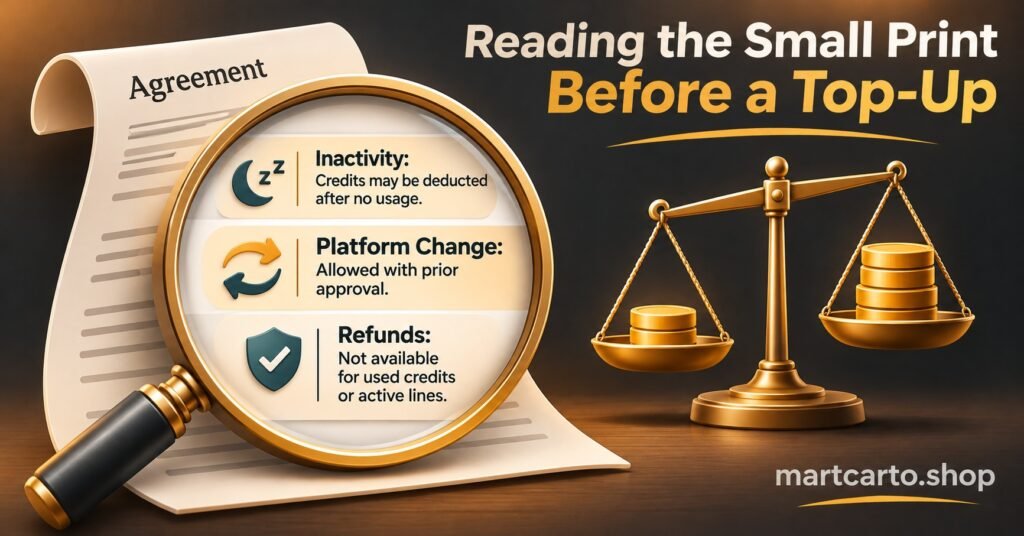
Some suppliers close or freeze reseller panel accounts that show no activity for a set period. If that happens, a balance that technically never expires can still become unusable. Ask whether an inactivity rule exists and what counts as activity.
Supplier and platform changes
Lifetime usually means the lifetime of the account on that platform, not forever in an absolute sense. Should the supplier migrate to new software, merge with another business or stop trading, your balance depends on how they handle the transition. Written terms on migration are worth asking for.
Refunds and disputes
Unused credits are often non-refundable even when they never expire. A payment dispute on a past purchase can also lead some suppliers to freeze the whole balance while it’s investigated.
Transfers to sub-resellers
Credits you pass down to a sub-reseller may follow the receiving account’s rules rather than yours. Confirm whether transferred credits keep their lifetime status before moving large amounts.
One more distinction belongs here. Credits are a billing unit for a delivery platform, and a generous expiry policy says nothing about whether the programming carried on that service is properly licensed. Checking that the provider holds the right distribution rights for your market is a separate step, and an important one.
Buying Bigger Packs Without Overcommitting
Larger packs usually bring a lower price per credit, and because lifetime credits don’t expire, it’s tempting to buy as much as you can afford. The discount is real. So is the concentration of risk, since every extra credit is money held by one supplier with no way of withdrawing it.
A sensible size comes from your own records rather than the discount ladder. Start with your expiry calendar: count the credits needed to renew every line ending in the next three to six months, then add a realistic estimate for new customers over the same period. That figure is the stock you’ll genuinely use. Anything above it is a bet on the supplier’s stability, and it should be a bet you’d be comfortable losing.
Splitting purchases helps too. Two medium packs a few months apart often cost only slightly more per credit than one large pack, and they let you check that service quality and support still justify your spend before committing the second half. You can compare how pack size affects cost in this breakdown of reseller panel pricing by pack size.
Pro tip: Before any large top-up, renew a single test customer from your current balance and time how long support takes to answer a simple question. A supplier who responds slowly with a modest balance is unlikely to improve once they hold a bigger one.
| Question to ask before a large pack | What a reassuring answer looks like |
|---|---|
| Do unused credits ever expire? | A clear “no”, given in writing |
| Is there an inactivity rule? | None, or a stated period you can easily meet |
| What happens if the platform changes? | Balances migrate in full to the new system |
| Are unused credits refundable? | A stated policy, even if the answer is no |
| Do transferred credits stay lifetime? | Yes, for sub-reseller balances too |
Common Questions Before You Buy a Larger Pack
Can I turn lifetime credits back into money?
Usually not. Most suppliers treat credits as non-refundable once purchased, regardless of whether they expire. Check the refund policy separately from the expiry policy.
Are lifetime credits cheaper than expiring ones?
Not automatically. Compare the price per credit at the pack size you’d really buy. Lifetime credits save money when you’d otherwise waste expiring stock, but a higher per-credit rate can cancel that out.
Will my customers’ subscriptions last forever too?
No. Every line you create has a fixed length chosen at activation and ends on its expiry date unless you renew it with new credits.
What happens to my balance if I stop selling for a few months?
It should stay intact, provided your supplier has no inactivity rule. Logging in occasionally and keeping the account in good standing is a reasonable precaution.
A Quick Check Before Every Top-Up
- Count the lines expiring in the next three to six months and the credits needed to renew them.
- Add a realistic number for new customers, not a hopeful one.
- Reread the supplier’s terms for inactivity, migration and refund clauses.
- Confirm whether credits passed to sub-resellers keep lifetime status.
- Save the written no-expiry confirmation with this purchase’s receipt.
- Decide whether one pack or two smaller ones spread over time suits your risk.
Buy Credits That Keep Their Value
Lifetime Reseller Credits remove the expiry deadline from your stock, and that’s genuinely useful for a business with uneven sales. What they can’t do is change how customer lines work, so every renewal still needs fresh credits when its date comes round.
For today, open your panel, list every line expiring in the next quarter and work out the credits you’ll need to renew them. Later, once a few renewal cycles have passed, compare that figure against your actual spending and use it to set the size of your next larger pack. When you’re ready to top up, you can choose a credit pack that fits your renewal calendar and keep the rest of your balance working for you.