
An IPTV Panel vs IPTV Subscription decision comes down to whether you want to sell access to others or simply watch it yourself. A subscription gets one person watching on a handful of devices. A reseller panel gives you a dashboard, a pool of credits, and the ability to create and manage lines for as many customers as you can bring in. Neither is better in the abstract. It depends on whether you’re buying for your own living room or building something you can charge other people for.
[ez-toc]
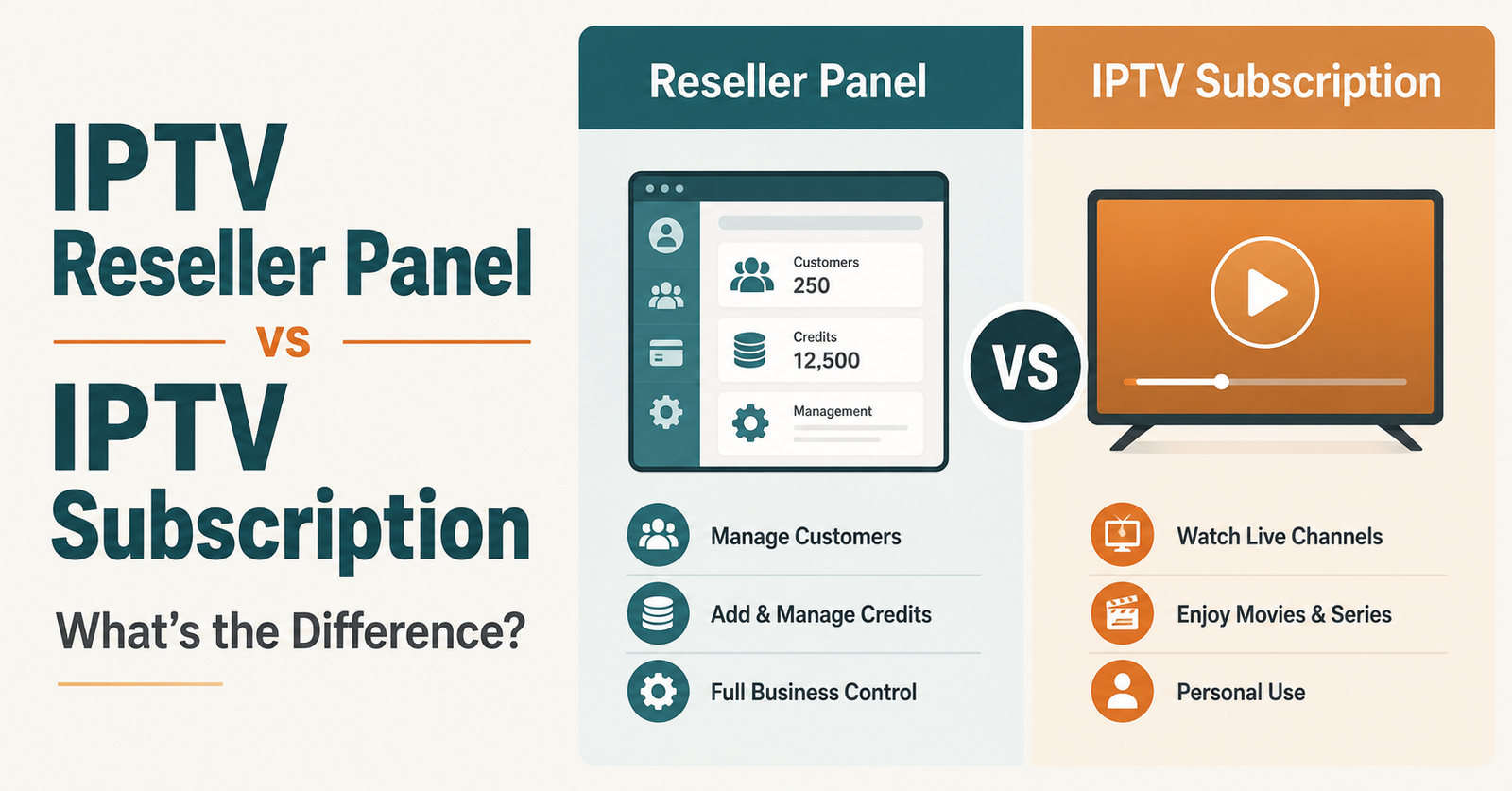
IPTV Reseller Panel vs IPTV Subscription: What Actually Separates Them
The distinction isn’t really about features. Both routes tend to give you access to a similar spread of live channels and on demand content. What changes is who controls the account and what happens once the first month runs out.
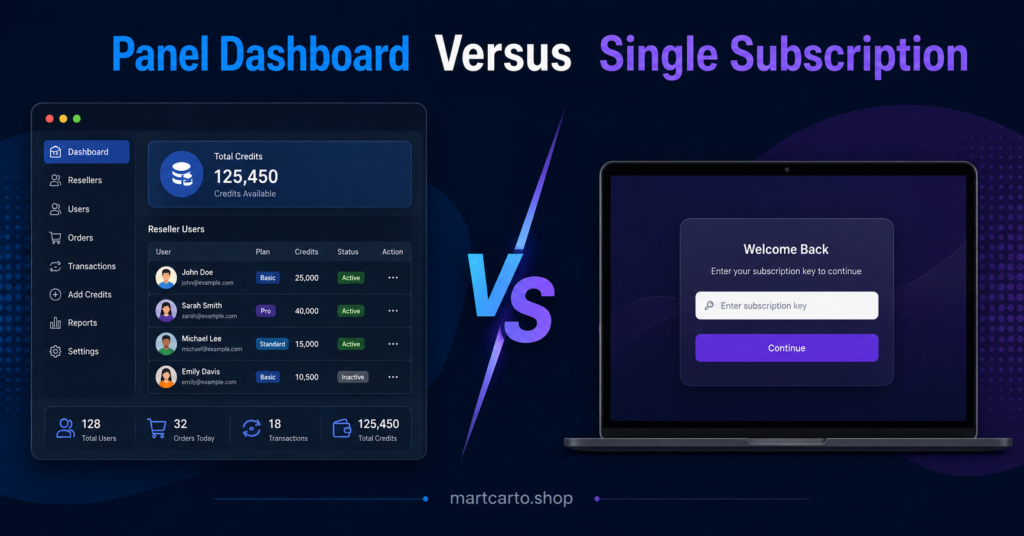
A subscription is a finished product. You pay, you get login details, you watch. There’s no dashboard, no ability to create additional users, and no way to resell what you’ve bought. If a friend wants IPTV too, they buy their own subscription from the same or a different provider.
A reseller panel is infrastructure. You’re not buying a single login, you’re buying the tools to generate as many logins as your credit balance allows. Log into the panel, create a customer line, assign a channel package, set an expiry date, and hand over the M3U or Xtream Codes details. The customer never sees the panel itself. They just get working credentials, the same as anyone with a normal subscription would.
Who Actually Needs a Reseller Panel
A panel makes sense the moment you’re setting up access for more than one paying customer, even if that’s currently just two or three friends chipping in. The moment money changes hands for something you’re managing on someone else’s behalf, you’re operating as a reseller whether you’ve labelled it that way or not.
It also suits anyone who wants pricing control. With a subscription, you pay whatever the provider charges, full stop. With a panel, you’re buying credits in bulk at a lower per-unit cost and deciding what to charge your own customers. The margin is yours to set.
Pro tip: if you’re only weighing this up for one household, a straight subscription is almost always simpler. Panels earn their cost back through volume, not through a single line.
What You Get With a Straight Subscription
A subscription suits someone who wants to watch and nothing else. No dashboard to learn, no customer support responsibilities, no need to think about bouquets or connection limits beyond your own household. You pay monthly or for a set term, and when it runs out, you either renew or walk away.
The trade off is that you have no leverage over pricing and no way to extend the service to anyone else without paying for a second, separate subscription. If the provider raises prices, you accept it or move on. There’s nothing to manage because there’s nothing to manage with.
Where the Cost Actually Lands
This is the part most people get wrong, because they compare a single month of subscription pricing against the upfront cost of a credit pack and conclude the panel is more expensive. It rarely is once you look at what a credit actually buys.
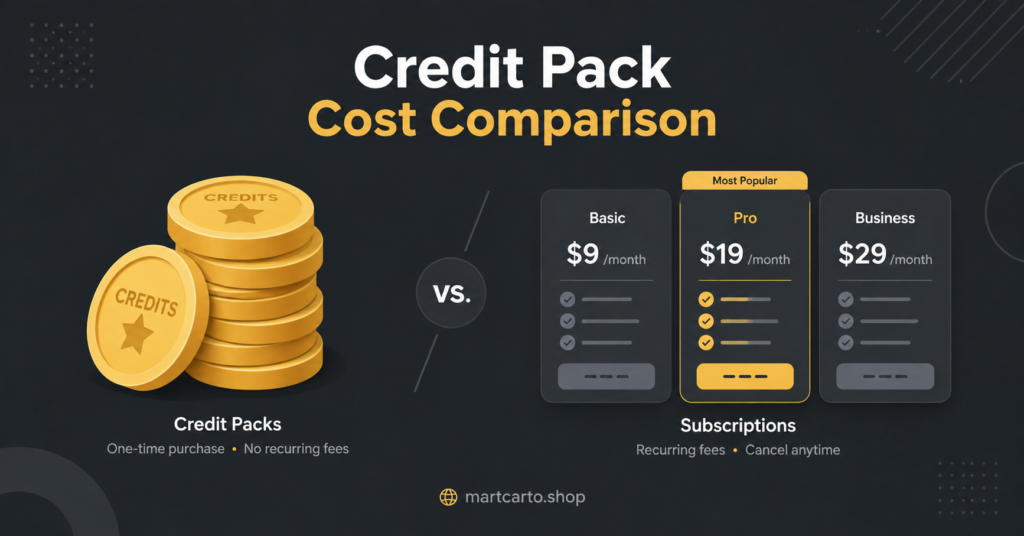
One credit typically equals one month of subscription for one customer. A 40-credit pack works out to 40 months of subscription time, spread across however many customers you set up. Buy that pack once, and you’re not paying a recurring platform fee on top. The panel itself is usually yours to keep using indefinitely. Compare that to running several separate subscriptions, each billed and renewed on its own schedule, and the maths tends to favour the panel fairly quickly once you’re past a couple of customers.
| Factor | IPTV reseller panel | IPTV subscription |
|---|---|---|
| Who it’s for | Anyone managing access for multiple customers | One household watching for itself |
| Control over pricing | You set what customers pay | Fixed by the provider |
| Ongoing management | Dashboard, lines, bouquets, expiry dates | None, it’s a finished product |
| Support responsibility | Yours, to your own customers | Handled entirely by the provider |
Mistakes People Make Choosing Between Them
The most common one is buying a panel expecting it to run itself. It doesn’t. You’re still the one fielding a message when a customer’s stream buffers on a Saturday night, and you’re still the one deciding whether to refund, extend, or troubleshoot. A panel gives you the tools, not a business that manages itself.
The opposite mistake is sticking with individual subscriptions for a group of people who’d genuinely be cheaper served through a panel. If you’ve bought three or four separate subscriptions for family members and you’re renewing each one on a different date, tracking different logins, you’ve effectively built yourself a small reseller operation without the tools that would make it easier to run.
Pro tip: before switching from subscriptions to a panel, add up what you’re currently spending across every separate account. That number is usually the clearest argument for or against making the move.
Questions Worth Asking Before You Commit
If you’re still weighing this up, a few honest questions cut through most of the confusion:
- Are you buying access for yourself, or managing it for other people who pay you?
- Would you be comfortable troubleshooting a customer’s connection issue, or would you rather that responsibility sat with someone else entirely?
- Does your usage look like one household, or several separate accounts you’re already juggling?
- Do you want the flexibility to set your own pricing, or would you rather pay a fixed rate and not think about it again?
Read through our IPTV Reseller Panel Prices page if the answers point toward managing access for others, and see how the panel actually works before deciding either way.
How Delivery Actually Works Once You’ve Chosen
Whichever route you take, the technical delivery ends up looking similar from the customer’s side. They receive either an M3U playlist link or Xtream Codes login details, plug them into a player like TiviMate or IPTV Smarters, and start watching. The difference is entirely upstream of that point. Our guide on M3U and Xtream Codes for IPTV Subscriptions breaks down what each format actually does if you want the technical detail.
Reliability matters more than most buyers expect going in, particularly if you’re the one a customer messages when something stops working. It’s worth reading through what to check for panel reliability before committing credits to any single provider.
Frequently Asked Questions
Do I need technical knowledge to run a reseller panel?
No. Creating a line, assigning a bouquet and setting an expiry date are all done through buttons in the dashboard. There’s no server setup or command line involved on the reseller side.
Can I switch from a subscription to a panel later?
Yes, there’s nothing stopping you moving from a personal subscription into a reseller panel once you’re managing access for more than yourself. The two aren’t mutually exclusive at different stages.
Do reseller credits expire?
That depends entirely on the provider. Some panels sell credits that never expire, others attach a time limit. Confirm this before buying, since it materially changes what a credit pack is actually worth to you.
Is a subscription cheaper if I only need one login?
Usually, yes. A single subscription avoids the upfront cost of a credit pack and the ongoing management that comes with running a panel, which only pays off once you’re serving more than one customer.
What happens if a customer shares their login beyond their device limit?
Most panels log connection activity, so you can see if a line is being accessed from more devices than it’s set up for. How you handle that, whether it’s a conversation about upgrading their plan or a straightforward warning, is down to you as the reseller.
Buy IPTV Reseller UK Credits & Launch Your IPTV Business Easily
Buyer Decision Checklist
- Confirm whether you’re buying for yourself or managing access for other paying customers
- Work out how many separate subscriptions you’re currently juggling, if any
- Ask whether panel credits expire before committing to a pack size
- Check what support responsibility falls on you once a customer is live
- Compare the total cost of a credit pack against the number of months it actually covers
The IPTV Reseller Panel vs IPTV Subscription question really just comes down to scale and responsibility. If you’re watching for yourself, a subscription stays simple and someone else carries the support burden. If you’re setting up access for other people, even a small handful of them, a panel gives you the pricing control and management tools that individual subscriptions were never built to offer. Work out which side of that line you’re actually on before you spend anything, and the rest of the decision tends to follow on its own.