
IPTV Buying Guide: What Actually Matters Before You Subscribe
I’ve gone through eleven different IPTV abonnement over the past three years. Some were rock-solid for months. One vanished overnight with no refund. Two froze every Sunday at 4 PM like clockwork, exactly when the Premier League kicked off.
This guide exists because most IPTV comparisons are written by people who’ve never actually loaded an M3U playlist at 10 PM on a Friday.
The IPTV market is bigger and messier than it’s ever been. Providers come and go. Prices are all over the place. Marketing copy is mostly fiction. What you actually need to know isn’t on their homepage, it’s in what happens after you hand over your email and payment details.
So let’s get into it.
Step 1: Know What You Actually Watch
This sounds obvious. It isn’t. Most people skip straight to comparing channel counts and price tiers without doing a 10-minute audit of their actual viewing habits. That’s how you end up paying for 20,000 channels and watching six of them.
Live Sports vs. VOD, Pick Your Priority
These two use cases have very different infrastructure requirements. Sports IPTV streaming, especially live events, demands low-latency, high-bandwidth servers that don’t buckle under simultaneous load. VOD doesn’t need that.
Before anything else, ask yourself:
Do you need specific sports packages? NFL Sunday Ticket, Premier League, UFC PPV, and F1 race weekends create massive concurrent load spikes. Your provider needs to handle those explicitly, not just claim “sports included.”
How deep does your VOD library need to be? Some services have 60,000+ titles. Others list 8,000 titles but half are dead links. The number means nothing without update frequency.
Do you watch international content? If you need Urdu news channels, Arabic drama, or Bangladeshi sports, shortlist providers who specifically advertise that region, not just ones with “international channels” in the tagline.
The VOD Library Problem Nobody Mentions
A “50,000 title VOD library” is one of the most abused claims in IPTV marketing. When I loaded one such library in TiviMate last October, roughly 30% of the streams returned a loading error or played a completely different title. The metadata was wrong, the thumbnails were mismatched, and maybe 200 of those 50,000 titles had subtitles that actually worked.
What to look for instead: search Reddit’s r/IPTV specifically for VOD reliability complaints about any provider you’re considering, not just overall ratings.
The Three Things That Actually Determine Quality
Every IPTV provider claims HD streams and 99.9% uptime. Here’s how to actually evaluate those claims.
Server Stability: The Only Thing That Matters During Live Events
Server stability isn’t a feature, it’s the baseline. But it’s also the hardest thing to verify before you subscribe.
A provider’s performance during off-peak hours (Tuesday afternoon, midnight) tells you almost nothing. The real test is Friday or Saturday evening, or during a high-profile live sporting event. Those are the moments when cheap, oversold server infrastructure shows its cracks.
Pro tip: If a provider offers a free trial, use it strategically. Don’t just test it Wednesday at noon. Test it Saturday evening. Load a premium sports channel and leave it running for 30 minutes. That’s your actual reliability indicator.
Terms to look for in provider documentation: CDN (Content Delivery Network) infrastructure, load balancing, and regional server clusters. Providers that invest in these will usually mention them. Ones that don’t, often haven’t.
One more thing, buffer control settings matter more than most users realize. In TiviMate, I always set the buffer to at least 10 seconds for live streams. If you forget to enable buffer control entirely, streams will freeze during any network hiccup, even on a 300 Mbps connection. That’s not the provider’s fault, but it looks like it is.
Video Quality and What Your Internet Can Handle
HD is the floor in 2026, not the selling point. Full HD (1080p) for primary channels is expected. 4K is still inconsistent, most providers have it for VOD; live 4K channels are rarer and usually limited to flagship sports events.
| Resolution | Minimum Speed | What You Actually Need | Stability Requirement |
|---|---|---|---|
| SD (480p) | 5 Mbps | 8-10 Mbps | Low |
| HD (1080p) | 20 Mbps | 25-30 Mbps | Medium |
| 4K/UHD | 50 Mbps | 60-80 Mbps | High, needs wired connection |
One note on latency: I’ve had 4K streams buffer on a 500 Mbps fiber connection because of high latency to the provider’s server (over 180ms). Speed isn’t the whole picture. If you’re having issues, run a ping test to the provider’s server IP, not just a generic speed test. Some IPTV panels show you the server region in the Stream Settings panel; use that to pick a server closest to your location.
Device Compatibility: More Complicated Than It Looks
Most providers support Firestick, Android TV, and mobile. That’s the standard. Where things get complicated:
| Device | Setup Method | What to Watch Out For |
|---|---|---|
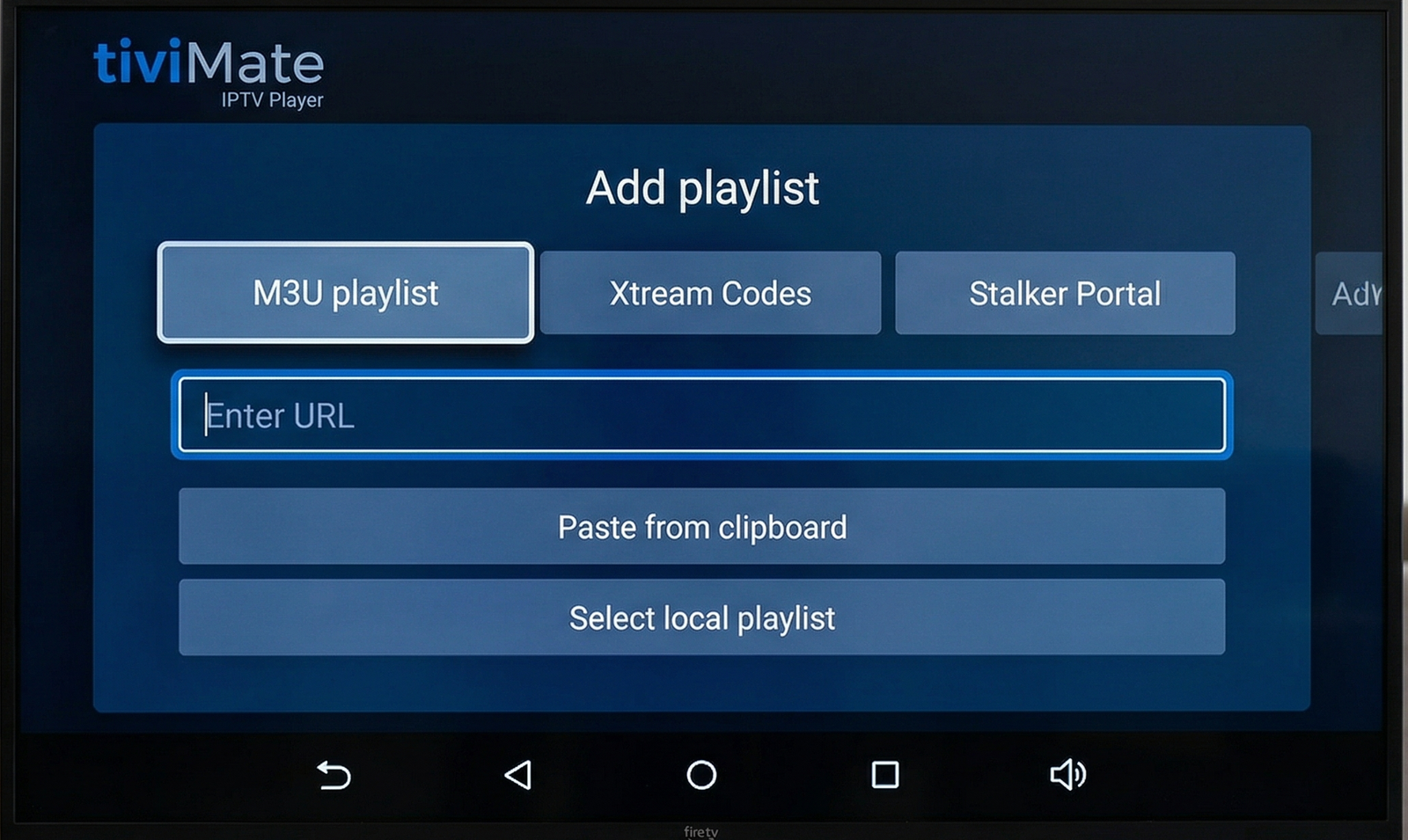
| Amazon Firestick 4K Max | APK sideload or TiviMate/IPTV Smarters via M3U or Xtream Codes | Loading an M3U file in TiviMate took me ~12 seconds for a 10,000-channel playlist. Larger playlists can freeze the UI on older Firesticks. |
| Samsung Smart TV (Tizen) | Smart IPTV or SS IPTV app from Samsung store | Tizen doesn’t allow APK sideloading. You’re limited to apps in the Samsung store, which are fewer and sometimes lag behind updates. |
| LG Smart TV (WebOS) | IPTV Smarters via WebOS app store, or cast from mobile | The WebOS version of IPTV Smarters is noticeably less polished than the Android version. EPG loading can be slow on older WebOS versions. |
| MAG/Enigma2 Boxes | Direct portal URL via device middleware | Fastest and most stable setup, but confirm the provider explicitly supports MAG portals, not just M3U. Not all do. |
| iOS (iPhone/iPad) | IPTV Smarters Pro via App Store | Background playback works fine. Airplay to Apple TV works well. |
Features Worth Paying For (and One That’s Usually Overhyped)
EPG: Non-Negotiable, But Quality Varies Wildly
The Electronic Programme Guide is the thing you’ll interact with more than any other feature. A slow EPG kills the experience faster than occasional buffering. I’ve used providers where the EPG took 25-30 seconds to load after opening, completely unusable in practice. The panel lagged slightly on first load even on a decent connection; that’s forgivable. Lagging every time you scroll channels is not.
What makes an EPG good: accurate scheduling (in sync with the actual broadcast), fast rendering, and at least 7 days of forward data. If you’re evaluating a trial, spend five minutes just navigating the EPG at normal speed. That’s the real test.
Catch-Up TV: Genuinely Useful
If you watch scheduled programming at all, news, sports, serial TV, Catch-Up is the feature that most replaces traditional recording. Good implementations let you go back 7 days. Some providers only offer 24-48 hours. A few advertise catch-up but only have it for 30-40% of channels.
When testing a trial, specifically test Catch-Up on a channel you care about. Navigate to yesterday’s schedule in the EPG and try to play something. That tells you whether the feature actually works, not just whether it’s listed in the features table.
Cloud DVR: Often Overhyped
Cloud DVR sounds great on paper. In reality, most IPTV providers implement it poorly, limited storage, recordings that expire after 24 hours, or recording functions that fail silently without any error message. Treat it as a bonus if it works, not a deciding factor.
Vetting a Provider Before You Pay
Where to Actually Find Honest Reviews
The provider’s own website reviews are useless, obviously. Third-party “best IPTV reseller” roundup articles are usually affiliate-driven and barely tested. The places where honest feedback actually accumulates:
Reddit r/IPTV, search the provider name + “review 2026.” Filter by recent posts. Look for patterns, not one-offs.
IPTV-specific forums (Satbits, Techkings), more technical crowd, more specific complaints.
Discord communities, some providers have official Discord servers, which is actually a good sign. You can see how they respond to outages in real time.
Red flags worth taking seriously: “went dark with no warning,” “stopped responding to tickets after week 3,” “channels disappeared after a sports event,” “refused refund despite outage.” One mention could be noise. Three or more in recent posts, that’s a pattern.
How to Evaluate a Trial Properly
A 24-hour trial isn’t enough if you only test it during quiet hours. Here’s the actual testing protocol I use, which takes about 90 minutes spread over two days:
- Load the playlist and check how long the initial import takes. Over 30 seconds for a standard playlist is a yellow flag.
- Navigate to at least 10 channels across different categories (local, sports, international). Time the channel-switching speed. Under 3 seconds is good. Over 8 seconds is a problem.
- Open the EPG and scroll through 3 days of programming. Note any missing schedule data.
- Test Catch-Up on one channel. Navigate to yesterday and play something from midday.
- Leave one channel running for 30 minutes without touching it. Count freeze events.
- Repeat step 5 during a peak evening hour (7-10 PM local time).
Note: Steps 1-4 take about 20 minutes total. Steps 5-6 require leaving your device running. Don’t skip the evening test, it’s the only one that actually matters for reliability.
Pricing: What’s Normal and What Should Worry You
The IPTV pricing landscape in 2026 roughly breaks down like this:
- $5-$10/month: budget tier, usually fine for basic viewing, occasionally unstable during events
- $12-$18/month: mid-tier, usually more stable infrastructure, better VOD
- $20+/month: premium, often includes dedicated servers, more simultaneous streams, and actual customer support
Annual plans are always cheaper per-month, but don’t commit until you’ve done a full trial across multiple use cases. Some providers offer a 7-day paid trial for $3-$5, which is far better value than a 24-hour free trial.
Watch out: If a provider refuses to offer any trial period at all, that’s a serious red flag. Confident services let you test. The ones that don’t are banking on you not asking for a refund.
What Most IPTV Reviews Don’t Tell You
After testing eleven services across two years, here are the things most reviews skip entirely:
The “99.9% Uptime” Claim is Meaningless
Every provider advertises it. None of them prove it with independently verifiable uptime logs. What matters is whether their uptime holds specifically during peak load events, major sports fixtures, award shows, breaking news. That’s when cheap infrastructure actually fails. “99.9% uptime” measured on a Tuesday at 3 AM is useless data.
Customer Support Collapses Exactly When You Need It
When you actually need support, during an outage, is precisely when most IPTV reseller providers go silent. The live chat widget disappears. Tickets take 48 hours. WhatsApp goes dark. Before subscribing, ask in a forum: “How does [provider] communicate during outages?” That answer is more useful than any feature list.
Channel Count Is a Vanity Metric
I’ve tested services with 80,000 channels where 40% of streams were dead, duplicated, or miscategorized. And I’ve tested a service with 8,000 channels where every single one loaded first time. Quality beats quantity, every time. Ask about active stream reliability, not total channel count.
Multi-Stream Plans Are Often Better Value Than They Look
If you’re splitting a subscription with a family member or roommate, a 3-connection plan at $16/month is often better value than two separate 1-connection plans at $8/month each. Most providers don’t advertise this clearly. Ask directly before assuming per-person pricing is the only option.
Provider Longevity Is Hard to Predict, But There Are Signs
Services that have been operating for 3+ years with consistent community reviews are meaningfully more reliable than new entrants. Check when their oldest forum mentions appear. A service that launched 18 months ago with no documented history before that is a higher risk, not always, but statistically, yes.
Who This Is NOT For
Third-party IPTV isn’t the right choice for everyone. Skip it if:
- You need guaranteed reliability for professional settings. Running a bar or sports venue that depends on live streaming? Unlicensed IPTV is a terrible idea, legally and practically.
- You’re not comfortable with occasional technical troubleshooting. IPTV requires a baseline of tech literacy. Playlist reloads, app reinstalls, server switches, these are periodic realities. If that sounds exhausting, a licensed service like Hulu + Live TV is a better fit.
- You want a completely passive, set-and-forget setup. For truly hands-off streaming, a legitimate service with native TV apps and zero configuration is the better choice.
- You’re in a country with active IPTV enforcement. Legal exposure varies significantly by region. Research your local landscape before committing.
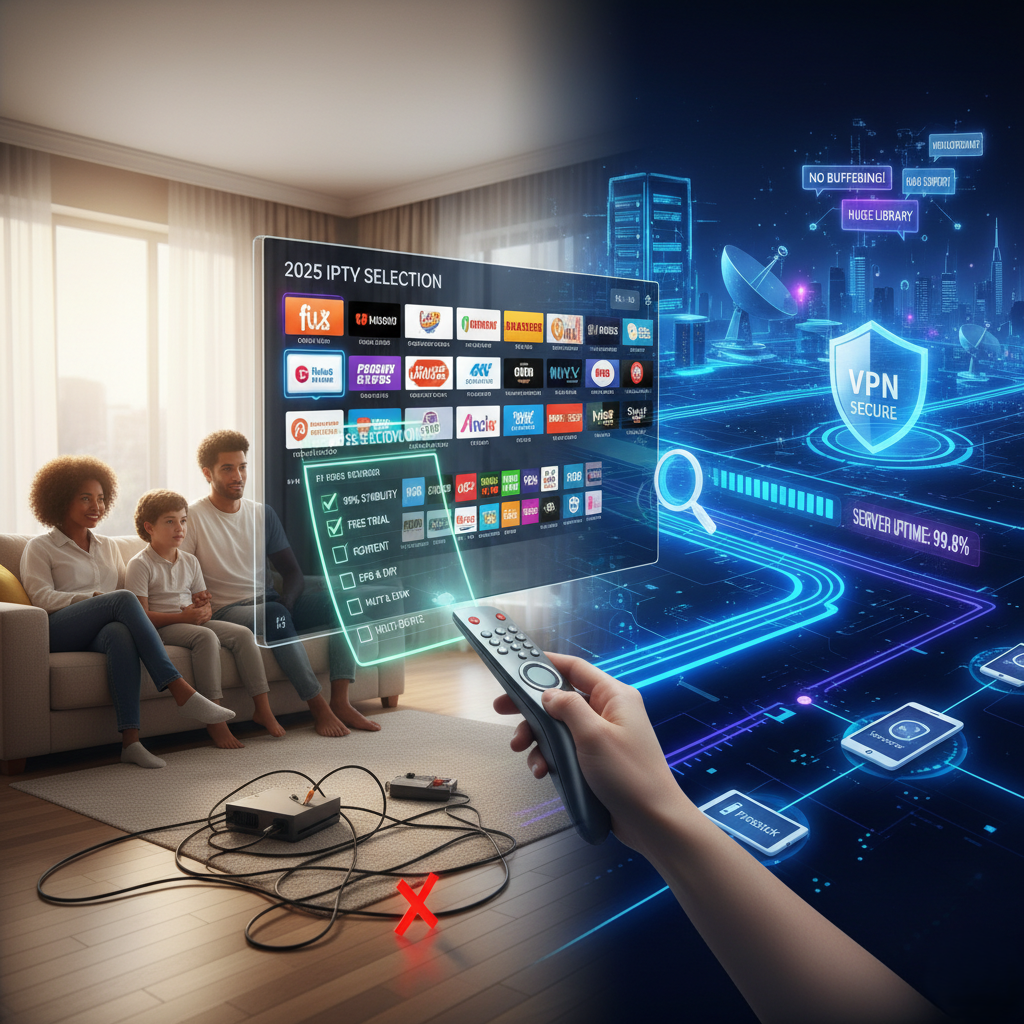
2026 Selection Checklist
Use this before subscribing to any provider:
- Trial available (24 hours minimum, 7-day preferred)
- Tested during peak evening hours, not just off-peak
- EPG loads within 5 seconds and covers at least 7 days forward
- Channel-switching under 5 seconds across multiple categories
- Your primary device and player confirmed compatible before paying
- Community reviews from the last 90 days, no recurring outage complaints
- Clear pricing with no hidden activation or EPG fees
- Support channel responds within 24 hours (test this before paying)
- Catch-Up TV tested and functional on at least two channels
- Sports channels tested during an actual live event (sports viewers)
- Provider has verifiable operational history of 2+ years
- VPN compatible, provider doesn’t block common VPN IP ranges
Frequently Asked Questions
What’s the minimum internet speed for a decent IPTV experience?
For HD streaming on one device, a stable 25 Mbps connection is sufficient. Stability matters more than raw speed, a 25 Mbps connection with low latency will outperform a 100 Mbps connection with high jitter. For 4K or multiple simultaneous streams, aim for 60 Mbps or higher, with a wired Ethernet connection for the streaming device.
Is TiviMate or IPTV Smarters better in 2026?
TiviMate is generally preferred by experienced users for its EPG performance and customization, but it’s Android and Firestick only and requires a one-time paid unlock (~$5) for full features. IPTV Smarters Pro is more cross-platform, including iOS, and has improved significantly in recent versions. On a Firestick or Android TV box, TiviMate is the better experience. For iOS or Samsung/LG Smart TVs, IPTV Smarters is the more practical choice.
How do I know if a provider is legitimate or fly-by-night?
Check for: forum history going back at least 2 years, a consistent response pattern on public threads when things go wrong, a functional status page or outage communication channel, and no major “went dark” incidents in their history. No single sign is definitive, but absence of all of them is a strong negative signal.
Why do streams buffer even when my internet is fast?
Four common reasons: high latency to the provider’s server (run a ping test to the stream URL), ISP throttling of IPTV traffic (test with a VPN enabled), insufficient buffer settings in your player (increase buffer to 10+ seconds in TiviMate’s playback settings), or the provider’s server is simply overloaded at peak times. The last one you can’t fix, which is why testing during peak hours before subscribing matters.
Can I use IPTV on a Samsung or LG Smart TV without a Firestick?
Yes, with limitations. Samsung’s Tizen OS doesn’t allow APK sideloading, you’re limited to Smart IPTV or SS IPTV from the Samsung app store (both have small annual fees of ~$5-$7/year). LG’s WebOS supports IPTV Smarters and works reasonably for basic use. For the best Smart TV experience overall, a $55 Firestick 4K plugged into the HDMI port is still the cleanest solution.
What should I do if my provider suddenly goes offline?
First, check the provider’s Discord or Telegram channel, planned maintenance is sometimes announced there without email notice. If there’s no communication after 24 hours, post in r/IPTV to see if others are affected. If the service has genuinely gone dark, dispute the charge with your payment provider if you’re within the dispute window. This is one reason monthly plans are worth considering until you’ve verified a provider’s long-term reliability.
Does a VPN slow down IPTV streaming?
A well-configured VPN adds minimal overhead, typically 5-15% speed reduction on a premium server. More importantly, a VPN often improves IPTV performance when your ISP is throttling streaming traffic, which is common enough to be worth testing. Use a VPN server in the same country as the IPTV provider infrastructure for the lowest added latency.
About Me

Muhammad Ahmad Adnan is an IPTV expert at Autven Private Limited, specializing in IPTV panels, reseller systems, and stream performance optimization. He works directly with live environments, ensuring stability, security, and reliable delivery through tested, real-world solutions.
Connect: