
IPTV Reseller Social Media Marketing Guide 2026: What Actually Works
Most IPTV resellers approach social media marketing the same way, generic posts, vague claims about “the best streams,” and a link to a pricing page. Then they wonder why the leads don’t come. This guide covers what actually works, platform by platform, with specific content approaches that generate leads without triggering the account restrictions that kill IPTV-related content on most platforms.
Before getting into tactics: this platform provides subscription management software and reseller infrastructure only. It does not host television channels, stream media content, or distribute copyrighted material. The marketing guidance here is for promoting your legitimate reseller management service, not for marketing specific content channels or copyrighted programming.
[ez-toc]
Why IPTV Marketing Requires a Different Approach
Advertising a streaming reseller service isn’t like advertising a software product or a physical item. Most paid advertising platforms have restrictions on IPTV-related campaigns. Facebook Ads and Google Ads both have policies that affect how directly you can promote streaming subscriptions. Instagram restricts certain promotional formats. TikTok is aggressive about content that implies unauthorized content access.
This means organic social media strategy matters more in this niche than in most others. You can’t simply outspend competitors with paid ads the way an e-commerce brand might. You have to build an audience that finds you through genuinely useful content and community presence.
The resellers generating consistent organic leads understand one thing clearly: they’re not marketing streams. They’re marketing reliability, simplicity, and professional service. The distinction sounds subtle but it changes everything about how you create content.
Platform-by-Platform Strategy
Facebook: Communities and Long-Form Content
Facebook Groups remain the highest-quality organic lead source for IPTV resellers Panel in 2026, and they’re significantly underused. The reason they work: people in cord-cutting, streaming, and home entertainment groups are already actively looking for solutions. They’re asking questions, sharing experiences, and making purchase decisions in those conversations.
The approach that generates leads isn’t promotional posting. It’s consistent helpful participation. Answer technical questions about player app setup. Explain the difference between M3U and Xtream Codes credentials. Help someone troubleshoot a connection issue with their Firestick. Do this consistently in relevant groups for three to four weeks and you’ll receive inbound messages from people who want what you’re offering.
Facebook’s algorithm also still rewards native video content. Short walkthroughs, like “how to set up TiviMate on your Firestick in 3 steps,” get meaningful organic reach when posted as native video rather than external links. Keep these device-focused rather than service-focused to avoid policy issues.
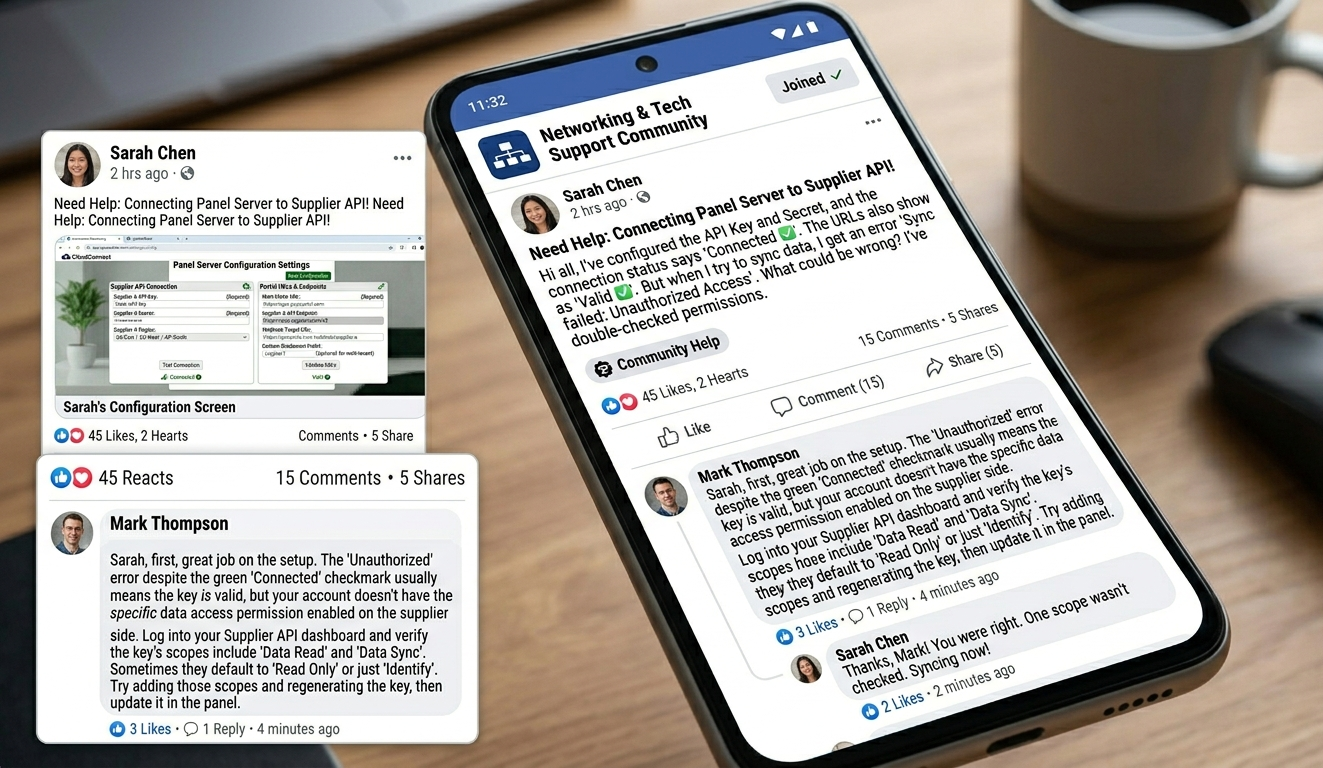
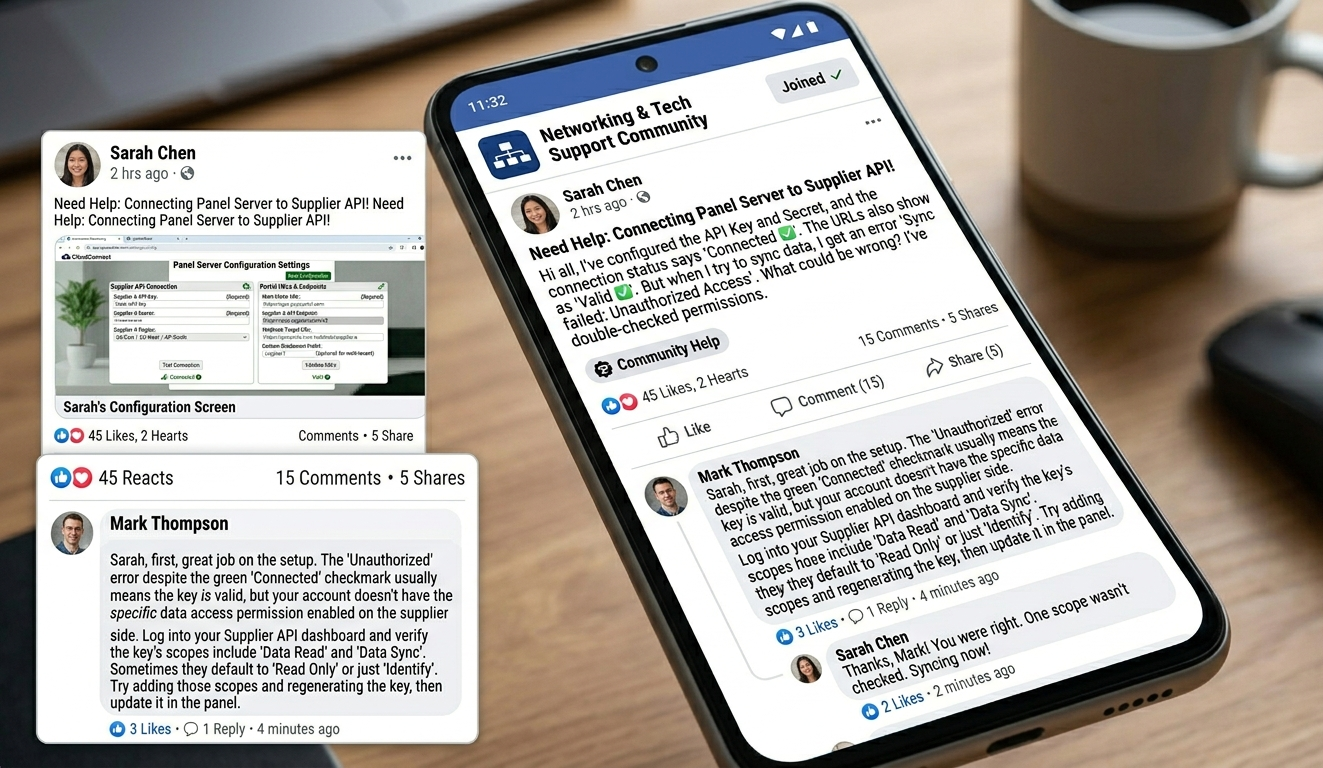
Facebook Group post showing helpful technical reply with engagement metrics
YouTube: The Long-Term Lead Engine
YouTube is the highest-ROI platform for this niche over a 12-month horizon. Setup tutorial videos, how to configure IPTV Smarters Pro, how to add a playlist to TiviMate, how to troubleshoot common connection errors, all rank organically in Google search results, not just YouTube search.
Someone who finds your setup tutorial video through Google search is in an active information-gathering phase. They’re learning how streaming works. A well-structured video that demonstrates genuine technical competence, followed by a clear call to action at the end, converts at a meaningful rate.
The content investment is higher than other platforms, but so is the lifespan. A good setup tutorial video keeps generating views and leads for 18 to 24 months without any additional effort. That’s fundamentally different from a social post that disappears from feeds within 48 hours.
Title structure that ranks well: device-specific and problem-specific. “How to Fix IPTV Buffering on Firestick 2026” outperforms “Best IPTV Setup Guide” because the former addresses a specific search query from someone with a specific problem.
TikTok and Instagram Reels: Top-of-Funnel Awareness
Short-form video on TikTok and Reels works for awareness but requires careful content framing. Content that performs well and stays within platform guidelines:
“How I cut my TV bill from £80/month to under £20” (lifestyle/savings angle)
Quick tips for optimizing Android TV boxes
Device comparison content (“Firestick vs Android TV box for streaming”)
Home entertainment setup tours
Content that gets restricted or removed: anything that shows or implies access to specific copyrighted channels, anything that explicitly mentions “live TV” subscriptions in promotional framing, anything with brand logos from content providers.
The TikTok/Reels audience is top-of-funnel. They’re becoming aware of alternatives to cable, not actively looking to buy today. Content here should direct people to your YouTube channel or a lead capture page rather than directly to a pricing page. The conversion path is longer from short-form video.
Telegram: Your Highest-Converting Channel
Telegram is where IPTV resellers’ most engaged prospects live. If you’re not running a Telegram channel or group, you’re leaving a significant lead source untapped.
Telegram works for this niche because the audience self-selects aggressively. People join streaming-related Telegram channels specifically because they’re interested in the topic. Engagement rates in Telegram channels consistently exceed what’s achievable on Facebook or Instagram for the same content.
Content that performs well on Telegram: setup guides with screenshots, technical tips, honest service updates, and direct promotional content (Telegram has less restrictive policies than mainstream social platforms for this niche).
One important distinction: a Telegram channel (broadcast only, you post to followers) versus a Telegram group (community discussion) serves different purposes. A channel is for broadcasting updates and content to prospects. A group is for community-building and support. Running both requires more management but creates a self-reinforcing ecosystem, group members become channel followers, channel followers buy subscriptions.
Content Strategy: What to Actually Post
The content that generates leads in this niche is overwhelmingly educational and practical. The audience for IPTV reseller services is people who are already interested in streaming alternatives to cable. They want information that helps them make decisions and use the technology effectively.
Content categories that consistently perform:
Device setup tutorials, how to configure specific player apps on specific devices. These answer the questions people are actively searching for. They’re searchable, shareable, and they demonstrate competence without making promotional claims.
Troubleshooting guides, like “why is my IPTV buffering and how to fix it,” or “what to do when your IPTV app shows authentication error.” These reach people at the moment they’re frustrated with their current service, which means high purchase intent.
Comparison content, such as TiviMate vs Smarters Pro, Firestick vs Android box, 1-month vs 12-month subscription value. These attract people in the decision-making phase.
Behind-the-service content, how account management works, what a reseller panel actually does, how subscription credits work. This builds credibility and sets accurate expectations.
Content calendar showing weekly post types across Facebook, YouTube, and Telegram
Using Panel Analytics to Inform Marketing Decisions
This is where the management platform connects directly to your marketing strategy, and it’s an approach most resellers overlook.
The analytics section in your reseller dashboard provides data that’s directly relevant to content and offer strategy:
Device type distribution: if 60% of your subscribers connect via Firestick, Firestick-specific content should dominate your tutorial output. Create content for where your actual customers are, not for all possible devices equally.
Peak usage hours: knowing when your subscribers are most active tells you when they’re most engaged. Social posts and email sends timed to coincide with your audience’s active hours consistently outperform randomly timed posts.
Plan type distribution: if 80% of your subscribers are on monthly plans, you have both a churn risk and a marketing insight. Content that addresses “why annual plans are better value” speaks directly to an upgrade path that improves your revenue stability.
Connection failure patterns: if the logs show a specific channel category having elevated failures, that’s a support issue but also a content opportunity. A proactive post or message to affected subscribers (“we’re aware of issues with X and working to resolve them”) demonstrates responsiveness that strengthens brand trust.
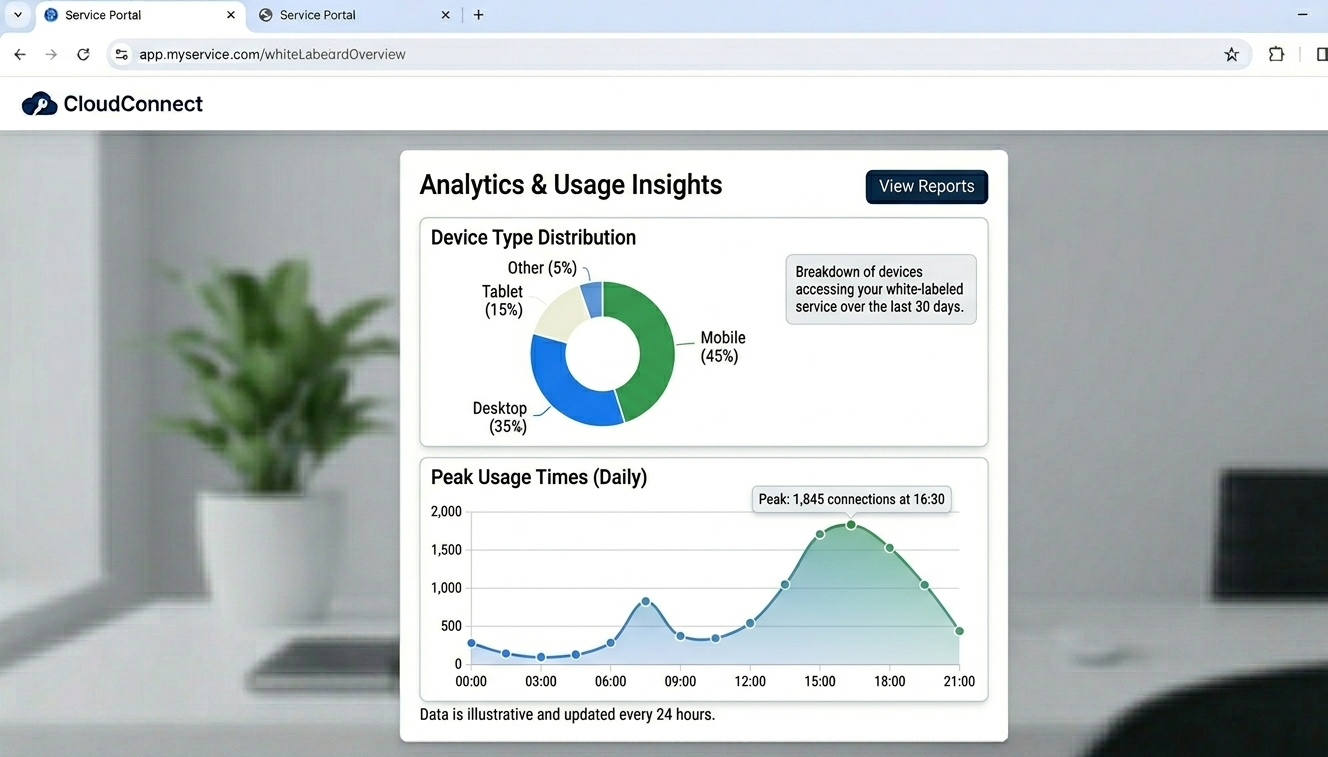
Analytics section showing device type breakdown chart and peak usage time data
Lead Generation: Free Trials Done Right
Free trials are the most effective lead-to-subscriber conversion tool in this niche when managed correctly. They’re also where many resellers waste credits without converting.
Keep trials short. 24 to 48 hours is sufficient. Subscribers in this market make decisions quickly once they see the service works. A week-long trial doesn’t meaningfully improve conversion rates. It just delays the decision and costs more credits.
Pre-qualify before offering trials. Ask the prospect what device they’re using, what service they’re currently on, and what they’re looking for. This conversation serves two purposes: it filters for genuinely interested prospects and it gives you the information to configure their trial account correctly (right device format, right connection type).
Set up the trial account properly. When creating the trial account in your User Management tab, configure it exactly as you’d configure a paid account: correct connection limit, correct format for their device, content filtering if relevant. A trial that’s configured poorly creates a poor impression that misrepresents your actual service.
Follow up at the 24-hour mark. A simple message: “How’s the trial going? Any setup help needed?” This catches people who had trouble connecting and would otherwise just disappear without converting.
Track trial conversion rates. If you’re running ten trials and converting two, something in your process or your service quality needs attention. Track this number weekly in a simple log alongside the trial start date and outcome.
What Most Marketing Guides Don’t Tell You
Platform Restrictions Will Find Your Content
The mainstream social platforms, Facebook, Instagram, TikTok, have algorithmic and policy-based restrictions on content related to IPTV services. This isn’t uniformly enforced, but it is real. Content that directly promotes streaming subscriptions is more likely to be deprioritized or removed than content that provides technical education about streaming technology.
The practical implication: frame your content as technical education and community helpfulness, not service promotion. Your CTA should point to a landing page or lead capture rather than directly to a subscription checkout. This isn’t just about avoiding restrictions. Educational content genuinely converts better than promotional content in this niche.
Organic Reach Takes Longer Than People Expect
The resellers who report that social media “doesn’t work” for IPTV almost universally gave up within 6 to 8 weeks. Organic social media in a niche audience context takes three to six months to build meaningful momentum. The content posted in month one doesn’t generate significant leads in month one. It generates leads in month four when the algorithm has established your content as relevant and your audience has grown.
If your marketing budget requires leads in week two, organic social media is not the right primary strategy. Paid advertising to warm audiences (people who’ve visited your pricing page or watched your YouTube videos) can accelerate the process, but it requires that organic foundation to exist first.
Engagement Matters More Than Follower Count
A Telegram channel with 200 highly engaged followers generates more conversions than a Facebook page with 5,000 passive followers. Engagement rate, the percentage of your audience that interacts with your content, is the metric that correlates with lead generation, not raw follower count.
Build slowly with content that generates genuine responses rather than artificially inflating follower counts. The audience quality difference between people who found you through helpful content versus people who followed you because of a giveaway or follow-for-follow is dramatic in conversion terms.
Real Marketing Mistakes and What Fixed Them
Mistake 1: Posting primarily promotional content. Outcome: Low engagement, restricted reach, and almost no inbound leads despite consistent posting over two months. Fix: Shifted to 80% educational/technical content and 20% promotional. Engagement rates increased significantly within four weeks. Leads began coming from posts I’d published six weeks earlier that the algorithm had started distributing more broadly.
Mistake 2: Sending trial users directly to the Xtream Codes credentials without a setup guide. Outcome: Most trial users couldn’t complete setup independently. Low conversion rate, high support volume from people who had given up mid-setup. Fix: Created device-specific setup guides (Firestick, Smart TV, iOS, Android) and sent them alongside trial credentials. Trial conversion rate improved substantially.
Mistake 3: Not following up with trial users. Outcome: Of ten trial accounts created, seven never activated a paid subscription and never responded again. No way to know whether they had a bad experience, forgot, or found another service. Fix: 24-hour follow-up message to every trial user. This alone identified four setups where the user had encountered a technical issue they hadn’t mentioned. All four converted after the issue was resolved.
Mistake 4: Using the same content format across all platforms. Outcome: YouTube-length content posted to TikTok got no traction. Short-form content posted to YouTube performed poorly in search results. Fix: Platform-specific content creation. YouTube gets longer, structured tutorials optimized for search. TikTok/Reels gets short, hook-driven content. Telegram gets more direct promotional and community content. Same information, different format.
Mistake 5: Not tracking which marketing channels were actually generating subscribers. Outcome: Spending significant time on Facebook content with no idea whether it was generating any revenue. Fix: Simple tracking question added to every new subscriber onboarding: “How did you hear about us?” Took about a week to reveal that Telegram was generating three times the leads per hour invested compared to Facebook. Shifted time allocation accordingly.
Who This Marketing Approach Is Not For
If you’re looking for an overnight subscriber base, organic social media strategy won’t deliver it. The timeline for meaningful organic lead generation is months, not weeks. Be honest with yourself about your revenue timeline before relying on organic content as your primary growth channel.
If you’re not willing to create genuinely useful content, if you only want to post promotional material, the approach described here won’t work. Educational content requires knowing your subject well enough to teach it. If you don’t know how to configure TiviMate properly or troubleshoot a common Xtream Codes error, you can’t create the content that attracts the audience who will pay for your service.
If your service quality is inconsistent, marketing will accelerate your business problems rather than solve them. Every new subscriber you acquire through marketing will form an opinion about your service. If that opinion is poor, they’ll share it, and negative word of mouth in tight-knit streaming communities spreads quickly. Fix service quality before scaling marketing spend.
Connecting Marketing to Panel Operations
The management dashboard and your marketing operation need to work in sync. Here’s how that looks practically:
When a new subscriber converts from a marketing campaign, their onboarding should be immediate, automated where possible. Using the API integration between your panel and your billing/lead system, account creation can trigger automatically when payment is confirmed. The subscriber receives credentials within 60 seconds of payment completion. That speed is itself a marketing asset. It creates an immediately positive first impression that reduces early churn.
The analytics panel’s subscriber acquisition data, when accounts are created and at what rate, lets you see in real terms whether your marketing is working. A week with strong content performance should show a corresponding uptick in new account activations. If it doesn’t, either the content isn’t converting or the conversion path has friction that needs addressing.
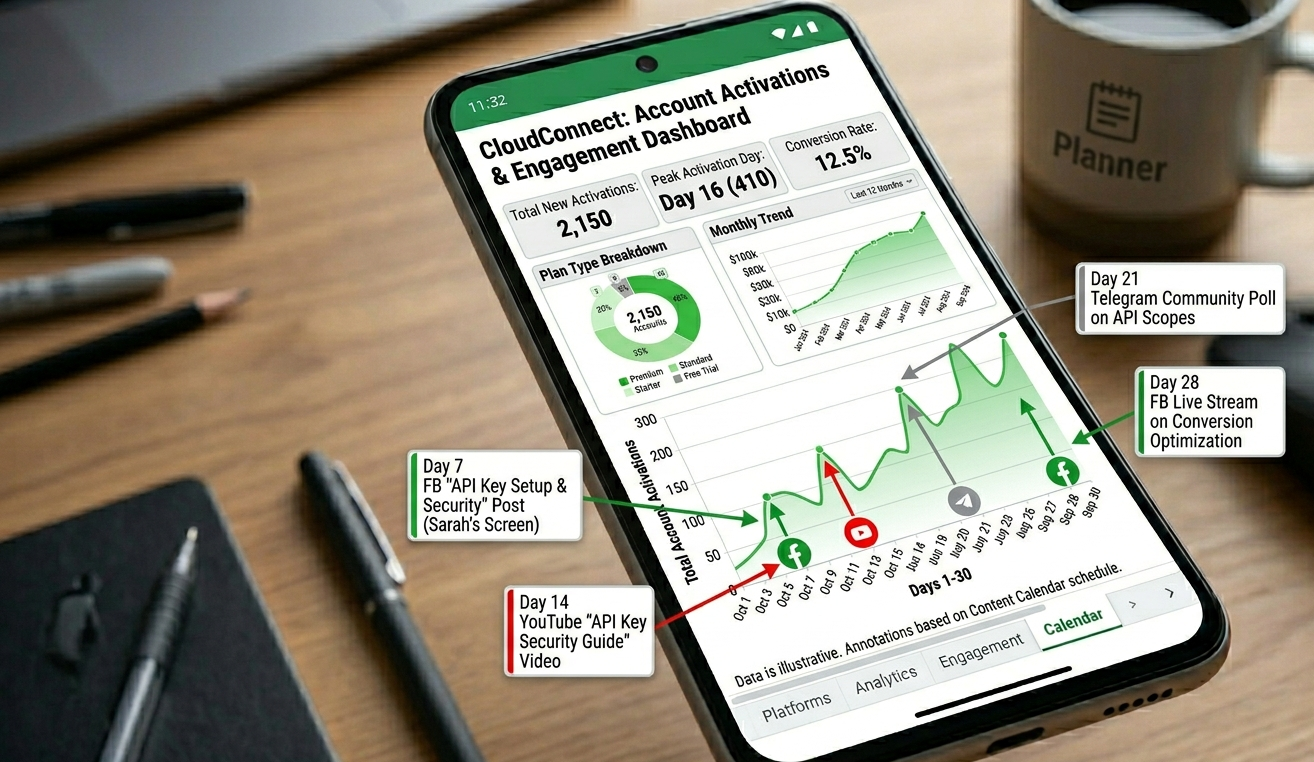
Dashboard showing new account activations over 30 days with annotations marking content posting dates
Renewal rates are the downstream marketing metric that matters most. A subscriber who renews is proof that both your marketing promise and your service delivery are aligned. A subscriber who doesn’t renew represents either a service failure or an expectations mismatch that began in marketing. Track renewal rates monthly and correlate them with which marketing channels acquired those subscribers.
The Step-by-Step Lead Conversion Workflow
Below is the full workflow from first content touch to a paid, activated account, broken down by step, tool, and how long each stage actually takes:
| Step | Action | Tool | Time | Outcome |
|---|---|---|---|---|
| 1 | Prospect engages with content | Social platform | n/a | Awareness created |
| 2 | Prospect messages or visits site | Direct message / landing page | n/a | Interest confirmed |
| 3 | Qualification conversation | Messaging app / email | ~5 min | Device/needs identified |
| 4 | Trial offered and account created | User Management tab | ~2 min | Trial credentials ready |
| 5 | Setup guide sent with credentials | Messaging / email | ~1 min | Onboarding started |
| 6 | 24-hour follow-up | Messaging | ~2 min | Issues caught, engagement maintained |
| 7 | Trial-to-paid conversion | Pricing page | n/a | Paid account activated |
| 8 | Welcome message and renewal reminder scheduled | Dashboard + CRM | ~3 min | Retention process begins |
Total time investment per converted subscriber from trial offer to paid account: approximately 12 to 15 minutes of active work. The rest is automated or asynchronous. At 10 conversions per week, that’s about two hours of conversion-focused time, manageable alongside other marketing activity.
FAQ
What social platform should I focus on first?
If you’re starting from scratch, Telegram and YouTube deliver the best ROI for the time invested in this niche. Telegram gets you an engaged audience fastest. YouTube builds long-term organic search traffic that compounds over time. Facebook Groups are worth participating in from the start, but building your own Facebook page audience is slower than the other two.
How should I handle platform restrictions on IPTV content?
Frame all content as technical education rather than service promotion. “How to configure IPTV Smarters Pro” is educational. “Sign up for the best IPTV service” is promotional and more likely to be restricted. Your bio or channel description can mention that you offer streaming management services without triggering content restrictions in your individual posts.
How often should I post to see results?
Consistency matters more than frequency. Three well-produced pieces of content per week across your primary platforms, consistently for three to four months, outperforms ten rushed posts per week for three weeks then nothing. The algorithm rewards sustained consistency over bursts of activity.
How do I measure whether my social media marketing is working?
Track new account activations in your dashboard week-over-week and correlate with content activity. Ask every new subscriber how they found you. Monitor which content pieces receive the most engagement and which generate the most inbound messages. These three metrics together give you an accurate picture of what’s generating real revenue versus what’s generating likes without conversions.
Should I use paid advertising?
Paid advertising can accelerate an established organic presence but is less effective as a standalone strategy in this niche. The platforms with the most relevant audiences have the most restrictive policies for IPTV-related advertising. If you pursue paid advertising, retargeting audiences who’ve already visited your pricing page or watched your YouTube content consistently outperforms cold prospecting campaigns.
How do I handle negative comments or reviews on social media?
Respond to every negative comment professionally and publicly. Acknowledge the issue, offer to resolve it directly, and follow up. Public complaints handled well become public demonstrations of your service quality. Ignoring or deleting negative comments in streaming-related communities generates more distrust than the original complaint. Most unresolved service issues stem from setup errors that can be fixed quickly. A public resolution is actually positive marketing.
What content format converts best for actual sales?
Based on what consistently drives inbound messages: troubleshooting content significantly outperforms promotional content for direct conversion. Someone who found your video by searching “IPTV not working on Firestick” and got their problem solved is far more likely to become a paying subscriber than someone who saw a promotional post in their feed. The intent level is completely different. Build your content around the problems your ideal subscribers are actively searching to solve.
Social media marketing for a IPTV Panel reseller operation is a longer game than most people want it to be, but the subscribers it generates, people who found you through helpful content and came to you already understanding what you offer, tend to stay longer and require less support than subscribers acquired through aggressive promotion. That retention difference compounds significantly over 12 months. Build for the long term and the short-term results will follow.