
IPTV Trends in 2026 and 2027: What Resellers Actually Need to Know
The IPTV market in 2026 looks different from what most trend forecasts predicted three years ago. Traditional pay-TV is declining faster in some markets (US, UK) and slower in others (parts of Central and Eastern Europe where cable infrastructure remains dominant). The over-the-top shift that everyone saw coming has arrived, but the market has fragmented in ways that create specific opportunities and specific challenges for UK IPTV reseller.
A few things that are actually happening rather than being predicted: traditional cable subscriptions in the US are declining at roughly 5 to 7% annually, UK satellite subscriptions have been falling for three consecutive years, and IPTV subscription counts in Europe grew 18% year-over-year in 2025 according to industry tracking.
This isn’t just cord-cutting. It’s a structural shift in how people expect to access television, on their schedule, on their device, at a price that reflects their actual usage rather than a 200-channel bundle they use 12 channels of. For resellers, this is a growth environment. The question is which specific trends will shape the next 18 months of operations and technology.
[ez-toc]
Trend 1: 5G Mobile Streaming Becoming Genuinely Practical
5G coverage has been rolling out since 2019 with underwhelming real-world performance in most consumer applications. That’s changing in 2026 as mid-band 5G (the frequency range that delivers both coverage and speed) reaches meaningful penetration in UK, US, and European cities.
The practical impact for IPTV: 5G mid-band delivers sustained speeds of 150 to 400 Mbps with sub-20ms latency in covered areas. That’s sufficient for 4K streaming with headroom, on a mobile connection, without WiFi.
What this means operationally:
- More clients using mobile as their primary device. Not as a secondary screen, but as the main one, particularly for younger demographics and for clients in countries where mobile internet is genuinely faster than fixed-line broadband.
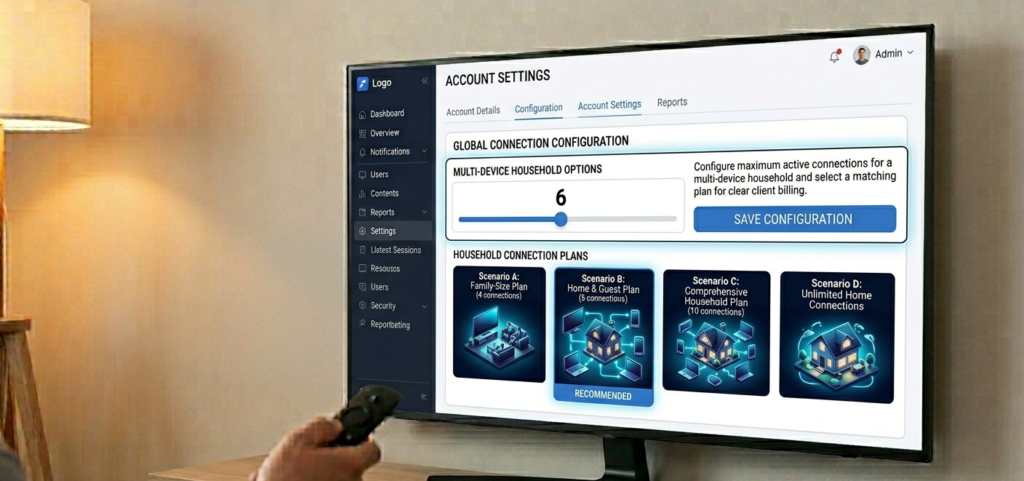
- Multi-connection accounts becoming more common. A client who previously needed one connection (TV at home) now plausibly needs three: living room TV, commute phone, and tablet. Account configuration and pricing need to reflect this.
- App quality on iOS matters more than before. The Android ecosystem has better IPTV app depth, but iOS has significant market share among mobile-primary viewers. If your recommended apps don’t have good iOS versions, you’re leaving mobile clients underserved.
- From a dashboard configuration perspective, this means reviewing connection limits on account templates. Accounts set up 12 to 18 months ago at 1 connection may need revisiting as clients’ usage patterns shift toward multi-device.
Trend 2: AI-Assisted Content Discovery Becoming Standard
The major streaming platforms (Netflix, Disney+, Apple TV+) have trained viewers to expect personalised content recommendations. The EPG-based navigation that most IPTV setups provide, a list of channels with a time-based schedule, feels increasingly dated by comparison.
The IPTV industry is beginning to address this through two approaches:
- Enhanced EPG integration with metadata. Better EPG providers now include genre tags, cast information, and content ratings that apps can use for search and filtering. TiviMate’s recent updates have improved this. You can search by genre or actor rather than just scrolling through channel lists.
- AI-driven VOD recommendation engines. Some advanced reseller platforms are incorporating simple recommendation logic, “users who watched this also watched” type functionality for VOD libraries. This is early-stage but the direction is clear.
- For resellers, the practical implication is that clients increasingly compare their IPTV experience to Netflix. The apps and configurations that feel most Netflix-like, good search, logical content organisation, VOD sections that actually have working content and decent metadata, retain clients better than raw channel count.
This is worth factoring into your provider selection. Ask specifically about VOD library maintenance and EPG data quality rather than just channel count.
Trend 3: Security and Authentication Tightening
The industry-wide pattern is moving toward more authentication checks, not fewer. Several things are driving this:
- Rights holders and enforcement agencies are more sophisticated. The tools used to identify unauthorised streaming infrastructure and trace the distribution chain have improved significantly. This is creating pressure on the provider layer that flows down to resellers.
- Credential sharing crackdowns are becoming normalised. Netflix’s successful crackdown on account sharing changed viewer expectations. People now understand that paid services can and do enforce connection limits. IPTV clients who previously assumed they could share credentials freely are being educated otherwise.
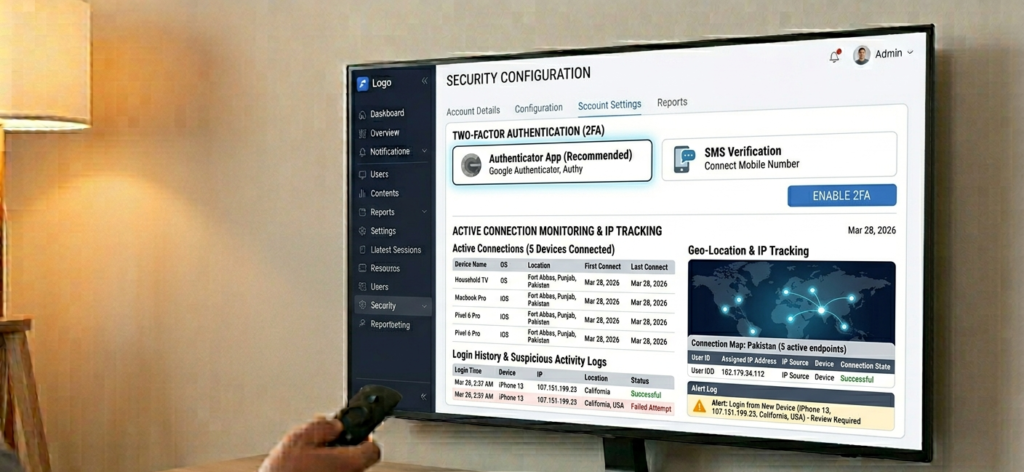
- Two-factor authentication adoption in panels is increasing. Most serious reseller dashboards now support 2FA for admin access. Advanced panels are beginning to offer per-account additional authentication options.
- From a daily operations perspective, this means the Active Connections monitoring in your dashboard becomes more important, not just for billing protection but as a routine security check. Accounts showing unusual connection patterns (many different IP addresses, abnormal geographic spread) may indicate credential sharing or compromise.
Trend 4: EPG Quality Emerging as a Key Differentiator
This is underemphasised in most trend forecasts. The Electronic Programme Guide has historically been treated as a secondary feature. The stream is what matters. That’s shifting.
As IPTV audiences mature and expect a full television experience rather than just a list of streams, EPG quality is becoming a retention factor. Specifically:
Catch-up functionality tied to EPG accuracy. Catch-up works by matching what’s in the EPG to what’s been recorded on the server. If EPG times are wrong, catch-up returns the wrong content. Clients who use catch-up heavily (and 5G mobile users in particular tend to, because they’re watching on delay) notice EPG inaccuracies more than passive viewers.
Multi-language EPG data. As IPTV Panel resellers serve more diverse diaspora communities, EPG data in the right language matters. Arabic, South Asian, and Eastern European content often has poor English-language EPG data and no local-language metadata. Providers who invest in this are differentiated.
Sports schedule accuracy. The single biggest EPG complaint from sports viewers is incorrect match times. Match schedules change frequently, rescheduled games, changed broadcast times, and EPG data often lags. Providers who update sports EPG data in near-real-time are meaningfully better for this use case.
If you’re evaluating a new provider, ask specifically about their EPG update frequency and how they handle last-minute sports schedule changes.
Trend 5: Reseller Dashboard Automation Becoming a Competitive Differentiator
A year ago, most reseller panels had similar feature sets in their basic tiers. That’s changing as the market matures and operators start making decisions based on dashboard capability rather than just price.
Features that are becoming standard across serious platforms in 2026:
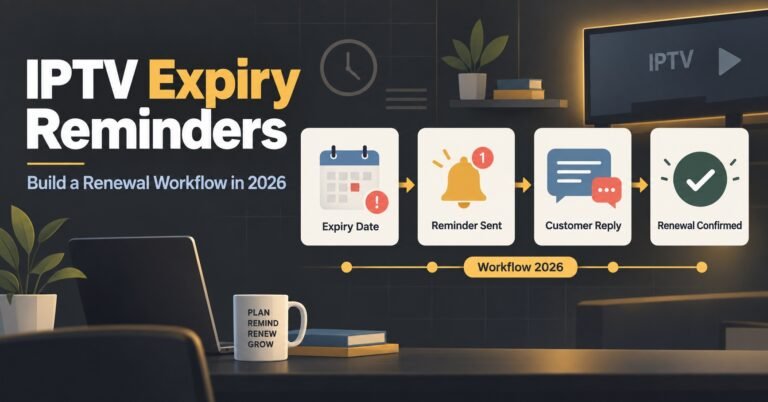
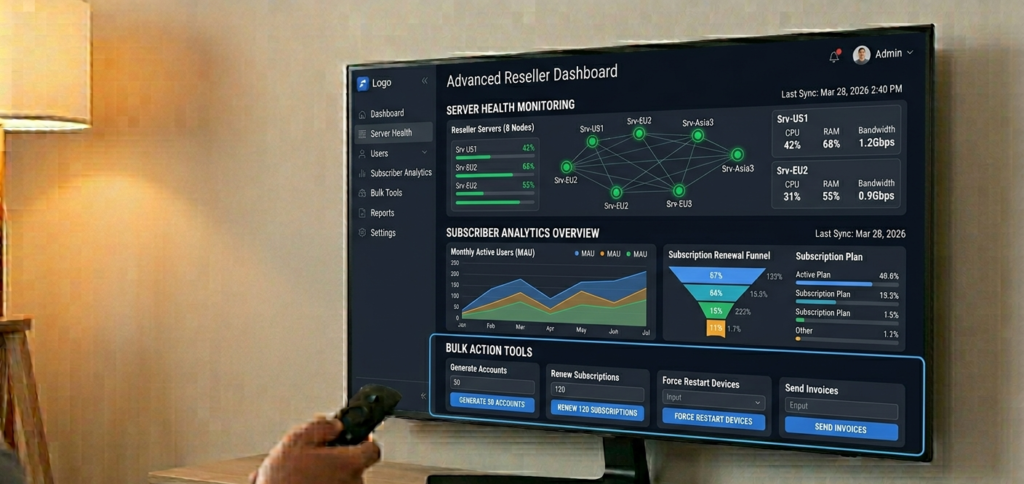
Automated renewal reminders: configurable email/SMS notifications at 7 days and 3 days before expiry. Standard on advanced panels, now appearing on basic ones.
Bulk account actions: modifying connection limits, extending subscriptions, or changing plans across multiple accounts simultaneously rather than one at a time.
Real-time server health monitoring: dashboard view showing which servers are under load, which are healthy, and which have active issues. This used to require external monitoring tools. It’s increasingly built into panels.
API access for automation: allowing integration with payment processors, CRMs, or custom workflows without manual dashboard intervention.
Features that are emerging on leading-edge platforms:
Predictive churn indicators: accounts that haven’t connected in X days flagged for proactive outreach before they churn passively.
Geographic analytics: understanding where your subscriber base is concentrated, useful for provider selection and marketing targeting.
For operators currently on basic panels, the cost-benefit calculation of upgrading has shifted. The time saved by automation on a 100-client base is now measurable in hours per week.
Trend 6: OTT Integration and Hybrid Service Models
The cleanest distinction used to be: cable TV for live and scheduled content, streaming services for on-demand, IPTV as an alternative to cable. Those categories are blurring.
Viewers increasingly want a single interface that includes live TV, VOD, catch-up, and access to their premium streaming subscriptions. Plex’s live TV integration is one answer to this. The major streaming platforms are also moving toward live, YouTube TV, Hulu with Live TV, and now Disney+ bundling live sports.
For IPTV resellers, the practical implication is that your service is competing in a context where clients also have Netflix, Disney+, and possibly YouTube TV. The value proposition needs to be clear: what does your IPTV abonnement provide that those services don’t?
The honest answer is usually: live international sports that aren’t available on US or UK streaming services, international language channels, and a broader live channel selection than US/UK streaming packages include.
Resellers who understand their actual competitive positioning, and communicate it clearly, retain clients better than those selling a generic “all channels for £20/month” pitch.
Account Creation Workflow: The Foundation Regardless of Trends
No matter how much the industry evolves, the core operational workflow stays the same. Getting this right is table stakes:
| Step | Action | Where | Notes |
|---|---|---|---|
| 1 | Log into dashboard | Main login | 2FA becoming standard |
| 2 | Open User Manager | User Management tab | Check credit balance first |
| 3 | Create account | Add New User | Configure connections for client’s likely multi-device use |
| 4 | Select appropriate plan | Plan dropdown | Consider 5G mobile usage patterns |
| 5 | Deduct credits | Credit system | Standard |
| 6 | Generate credentials | Cloud system | Both M3U and Xtream codes |
| 7 | Deliver securely | Encrypted message | Standard |
What Most 2027 Forecasts Get Wrong
Trend forecasts for streaming often focus on technology and miss the operational reality. A few honest observations:
5G doesn’t fix content quality issues. Faster mobile connections amplify problems with provider infrastructure. If the stream is unreliable, 5G just loads the buffering error faster. Better connectivity raises client expectations. It doesn’t compensate for poor providers.
Automation is a multiplier, not a replacement for quality. Automated billing and renewal reminders save time and improve cash flow, but they can’t fix a bad client relationship. A client who’s unhappy with service quality won’t be retained by a well-timed automated renewal email.
The market is getting more competitive, not less. The growth in IPTV demand is real, but so is the growth in providers and resellers. The operators who will be running sustainable businesses in 2027 are the ones investing in service quality and client relationships now, not just acquiring clients with low prices.
Privacy and security expectations are rising faster than most operators are adapting. GDPR compliance for UK/EU clients, data handling transparency, secure credential delivery. These were nice-to-have in 2023 and are becoming table stakes in 2026. Operators who haven’t addressed these are building on fragile foundations.
Basic vs. Advanced Panel Capabilities in 2026 to 2027
Here’s where the two tiers actually stand right now, and where the gap is widening:
| Feature | Basic Panel (2026) | Advanced Panel (2026 to 2027) |
|---|---|---|
| Automated renewal reminders | Emerging | Yes |
| Real-time server health | No | Yes |
| Bulk account actions | Limited | Full |
| Predictive churn indicators | No | Emerging |
| Multi-language EPG configuration | No | Yes |
| API access for automation | No | Yes |
| Geographic analytics | No | Yes |
| 5G/mobile optimisation settings | No | Emerging |
| Sub-reseller management | No | Yes |
Reseller Model vs. Own Infrastructure: The 2027 Perspective
| Factor | Reseller Model | Own Infrastructure |
|---|---|---|
| 5G adaptation | Provider-managed | Requires network investment |
| AI/EPG improvements | Provider-managed | Requires development team |
| Security updates | Provider-managed | Your responsibility |
| Time to adapt to trends | Fast | Slow (rebuild required) |
| Regulatory adaptation | Shared | Full responsibility |
The speed of change in the industry actually strengthens the case for the reseller model. When a major trend shifts, better 5G routing, improved EPG standards, new security requirements, a provider can update their infrastructure once and all resellers benefit. An operator who built their own server infrastructure has to fund and implement each change independently.
Frequently Asked Questions
What’s the single most important trend for IPTV resellers to act on in 2026?
Multi-device usage patterns. Clients are increasingly using IPTV across TV, phone, and tablet simultaneously, especially as 5G mobile streaming becomes practical. Review your default account connection limits. Many clients on 1-connection accounts from 12 to 18 months ago should probably be on 2 or 3 connections now. Adjusting this proactively reduces the “it stopped working” support calls that happen when someone picks up their phone while the TV is streaming.
How significant is 5G for IPTV businesses in practical terms?
Meaningful but not transformative in the next 12 months. 5G mid-band coverage is expanding quickly in major UK and US cities but remains patchy in suburban and rural areas. The shift toward mobile-primary viewing is real and worth planning for, but the majority of your client base will still be on home broadband for primary viewing through 2026 to 2027. Plan for it, don’t panic about it.
Should I upgrade my reseller panel tier in 2026?
Calculate the time cost of manual processes you’re currently doing. If you’re spending more than 3 to 4 hours per week on account management tasks that an advanced panel would automate, the upgrade likely pays for itself in that time saving alone. The tipping point is usually around 50 to 80 clients. Below that, basic panels are adequate. Above that, the automation benefits become significant.
How do I stay competitive as more resellers enter the market?
Service quality and specialisation. Generic “all channels” offerings are competing on price, which is a race to the bottom. Resellers who develop expertise in specific markets, Arabic-speaking clients, sports-focused households, British expats in specific regions, and provide genuinely good service to those audiences build retention that price competition can’t easily undermine.
What should I look for in a provider to ensure they’re ready for 2027 trends?
Ask specifically: How do you handle 5G mobile client connections? What’s your EPG update frequency and how do you handle last-minute sports schedule changes? What security features are you building into the platform? A provider who can answer these specifically and credibly is investing in the right areas. One who responds with vague generalities probably isn’t.
Are smaller reseller operations sustainable as the market matures?
Yes, but the basis of sustainability is changing. A 50-client IPTV Panel reseller who provides excellent service, genuinely responsive support, and is known in their community for reliability can sustain a very comfortable side income or primary income. A 50-client reseller competing on price with the same generic service as every other small operator will find margins eroding. Sustainability comes from client relationships, not scale.
How will dashboard technology change by 2027?
The main changes that seem likely based on current development trajectories: more predictive features (identifying clients at risk of churning before they do), better integration between billing systems and communication tools (automated personalised messaging rather than generic bulk emails), and tighter security features including per-account authentication options. The underlying account management workflow will remain similar. The intelligence around it will improve.
The 2026 to 2027 period is genuinely interesting for the IPTV industry. The growth is real, the technology is improving, and the opportunity for well-run reseller operations is solid. The operators who navigate it well will be the ones who treat it as a real business, investing in service quality, adapting to how their specific client base uses the service, and staying current with the tools that make operations more efficient.
The trends described here aren’t predictions requiring a crystal ball. They’re visible patterns already in motion that will become more pronounced over the next 18 months. Planning for them now is straightforward. Being surprised by them later is avoidable.