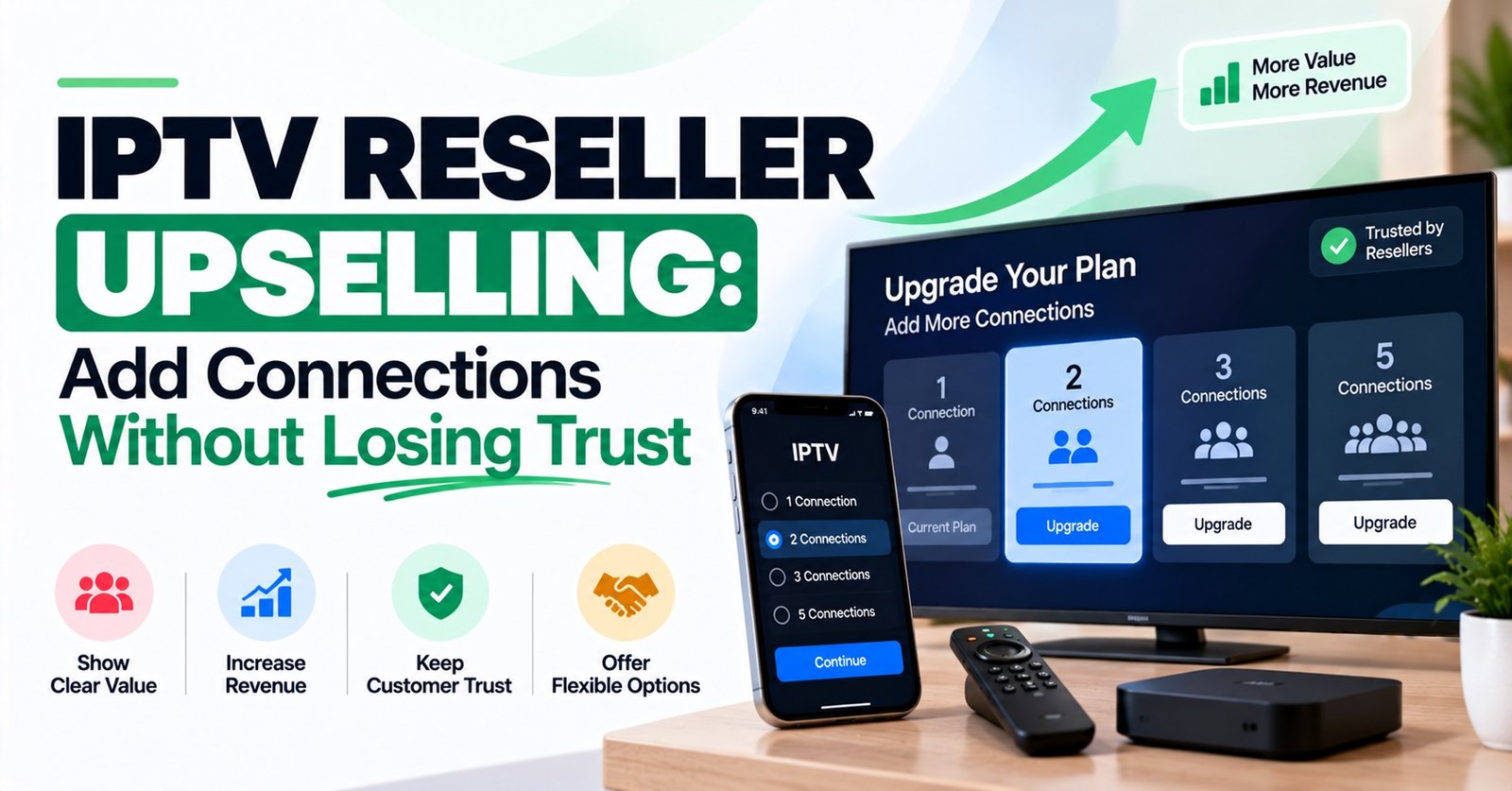

IPTV Reseller Upselling works when the offer answers something the customer has already shown you, such as a second household device, a plan limit they keep hitting or a smooth first renewal, and it fails when it is driven by your own monthly target. Existing customers already trust you with their evenings, so a badly timed offer can cost far more than the extra connection is worth.
Before sending any offer, check three things: the customer has no open fault, the upgrade solves a limit they have genuinely reached, and saying no is easy and free of consequences. If one of those is missing, wait. Most of what follows is about timing, because the price of an extra connection matters far less than the moment you mention it.
IPTV Reseller Upselling Starts With Service Health, Not the Price List
A customer who is struggling does not hear an upgrade offer as help. They hear it as a company that wants more money while the current service is not working properly. So the first rule is a quiet period: no offers while a support ticket is open, shortly after an outage you have acknowledged, around a failed or late renewal, or soon after someone complained about playback or setup. How long that quiet period lasts is your decision, and it should be longer after a serious incident than after a minor one.
There is a second reason to diagnose first. An upgrade cannot fix a weak home network, an old device or a setup error, yet it is tempting to suggest a higher tier when a customer reports poor performance. If the cause lies elsewhere, they pay more, nothing improves and they leave with a clear story about why. Fix the problem, let a stretch of normal service pass, and only then consider an offer.
Matching the Upgrade to the Reason the Customer Would Want It
Extra connections, longer terms and higher tiers are three separate requests. Each has its own signal, and treating them as one generic “upgrade” message is where most UK IPTV panel resellers go wrong.
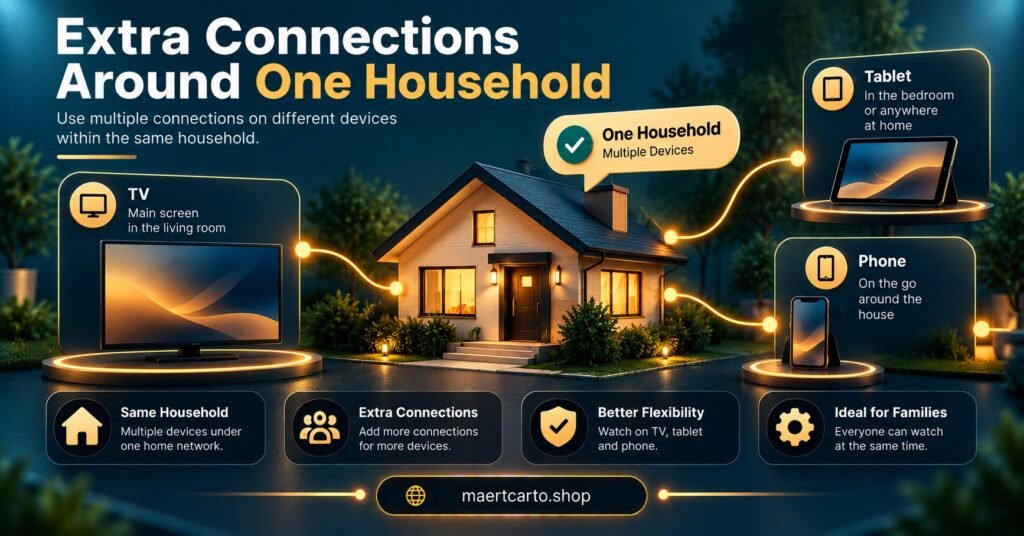
Extra connections: wait for a household signal
The best trigger is the customer raising it themselves. They ask whether the account will work on a second television, mention that someone in the house was blocked while another screen was in use, or set up a new device after replacing an old one. If your reseller dashboard or support log records connection-limit rejections, repeated ones are worth noticing, though you should check what your panel actually records before building a process around it.
When the signal is there, keep the offer plain: the exact price, whether it follows the current renewal date or starts a new one, and what the extra connection allows. Make clear the allowance is for the customer’s own household use, if that is what your terms say. Do not offer extra connections to a customer with one device who has never asked, because it reads as a sales attempt rather than a service.
Longer terms: ask after a stable renewal, not at signup
A customer who has renewed once without trouble now has evidence that the service holds up, which is the only honest basis for asking them to commit for longer. Present it as convenience, since fewer renewal tasks and fewer chances to forget a payment are real benefits, and give the price per period so they can compare. If there is no discount, say so rather than implying one.
Longer commitments raise the stakes, so spell out what happens if the customer changes their mind: refund terms, cancellation steps and what the term covers. Unclear terms are where trust breaks. Avoid countdown timers and invented scarcity, which damage credibility with people who already know you. Renewal and subscription rules differ between English-speaking countries and are changing in several of them, so check the requirements in each market you sell to.
Service tiers: only when the current plan is the limit
A tier upgrade makes sense when the customer has told you they need something their plan does not offer, such as more simultaneous connections, a faster support route or a feature your platform genuinely provides. Describe tiers in technical and service terms, and only promise what you can deliver from authorised sources. IPTV is a delivery technology, so what customers can legitimately watch depends on rights and permissions rather than on the tier name.
Show clearly what changes and what stays the same. Never let a higher tier make the standard plan look worse than it was when the customer bought it, because they will notice.
What a Low-Pressure Offer Sounds Like in Practice
Tone decides whether an offer feels like service or pressure. Three short examples show the pattern, and you should rewrite them in your own voice.
For an extra connection: “You mentioned the bedroom television earlier. If you would like it on the same account, an extra connection is [price] added to your current plan. No rush, and nothing changes if you would rather leave things as they are.”
For a longer term: “Your renewal is coming up. If you would prefer fewer renewals, a longer term is available at [price]. Here are the exact terms, including what happens if you change your mind.”
For a tier change: “Your current plan is limited to [limit]. The next tier removes that limit. Here is what changes and what stays the same.”
What makes these work is that each refers to something the customer said or experienced, states the price, says what happens if they decline and sets no deadline. Send them inside the existing support conversation or as a personal message rather than a blast to your whole customer list. A broadcast reaches people who have no need for the upgrade, and those are the ones who start to resent your messages.
Pro tip: Write the decline option into the message itself. Customers feel less cornered when “leave things as they are” is stated as a normal outcome.
Signs the Offers Have Started Costing You Trust
You will not find this on a sales report, but it shows up in support and renewals. Watch for these patterns.
| Warning sign | What it usually means |
|---|---|
| Customers ask why they are being contacted | The offer is not tied to anything they did or said |
| Complaints appear after promotional messages | Offers are too frequent or badly timed |
| Cancellations follow soon after a longer-term push | Terms were not explained clearly enough |
| Customers ask to remove an extra connection at renewal | It was added without a real need |
| Questions such as “what did I agree to?” | Pricing or renewal alignment was not made clear |
Any one of these is a prompt to slow down and review your triggers. Pausing offers for a while costs little. Rebuilding trust with customers who feel pushed is slow and often does not work.
Pricing and Credits: Check the Margin Before You Make the Offer
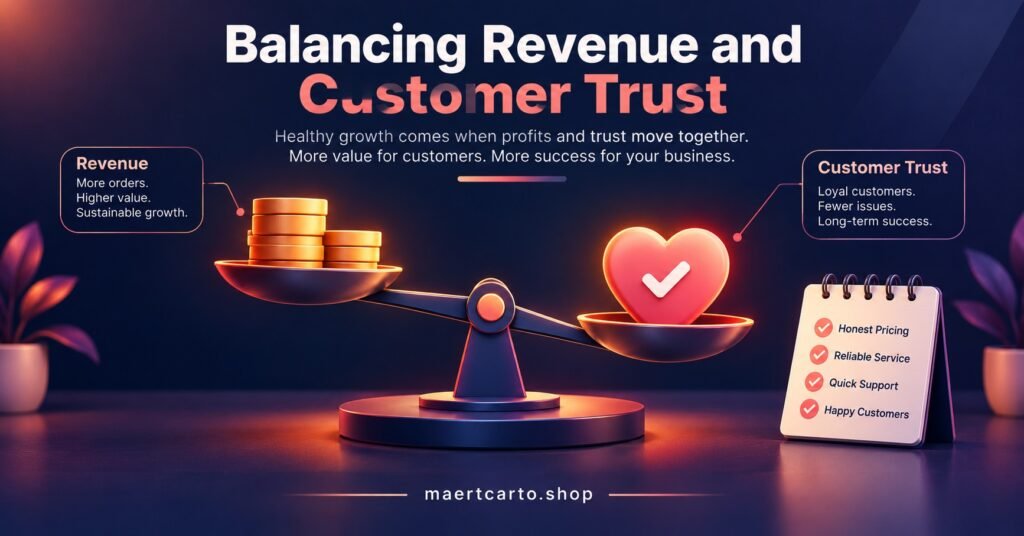
Whether an extra connection or higher tier changes your own cost depends on your provider and panel rules, so confirm it before promising anything to a customer. Check that the add-on price covers any additional credit use and the extra support it may bring. Equally, do not price it so low that it becomes unsustainable, because thin margins tend to end in slower support, and that damages the trust you are trying to protect.
Decide in advance how an add-on interacts with the current renewal date. Either it runs to the same date, with a clear adjustment, or it starts a separate cycle. Customers dislike surprises about when the next payment is due more than they dislike the price itself. If you are still choosing a dashboard and credit structure that can support add-ons cleanly, the streaming IPTV panel reseller platform options at maertcarto.shop are one place to start.
Keeping a Simple Offer Log
A spreadsheet or the notes field in your reseller dashboard is enough. Record the date, what you offered, what triggered it and how the customer responded. Then apply one firm rule: no more than one unprompted offer per customer per renewal cycle. The log is what stops two team members, or you on two different days, from asking the same person twice.
Pro tip: Record declines as carefully as acceptances. A logged “no” is what prevents the same offer reappearing three weeks later.
When the Answer Is No, or There Is No Answer
Silence counts as a no. Do not chase it. A single follow-up looks like service, but a second starts to look like pressure, so leave it until a genuinely new trigger appears, such as a new device question or an approaching renewal.
If the customer comes back later and asks about the same upgrade, try to honour the original price and terms where you reasonably can. It is a small gesture, and it tells the customer your first offer was sincere rather than a sales tactic.
Pre-Offer Checklist for Resellers
- No open ticket or recent incident for this customer
- The upgrade solves a limit the customer has actually reached
- The price, renewal date and refund terms are written down before you send anything
- Your own cost and margin for the add-on are confirmed
- The message states plainly that declining changes nothing
- No other offer has gone to this customer in the current renewal cycle
- The offer and the customer’s response are logged
Making Offers Customers Do Not Mind Receiving
IPTV Reseller Panel Upselling is really a support skill with a price attached: notice what the customer needs, confirm the service is healthy, make one clear offer and accept the answer. It will bring in less revenue in a rush than a promotional campaign, but it protects renewals, which are worth more over time. The limits are real. Not every customer will want more, your own costs set a floor on pricing, and the right timing varies by customer. A sensible next step is to review your last few support conversations, pick one trigger from this page and test it with a handful of customers before making it routine.