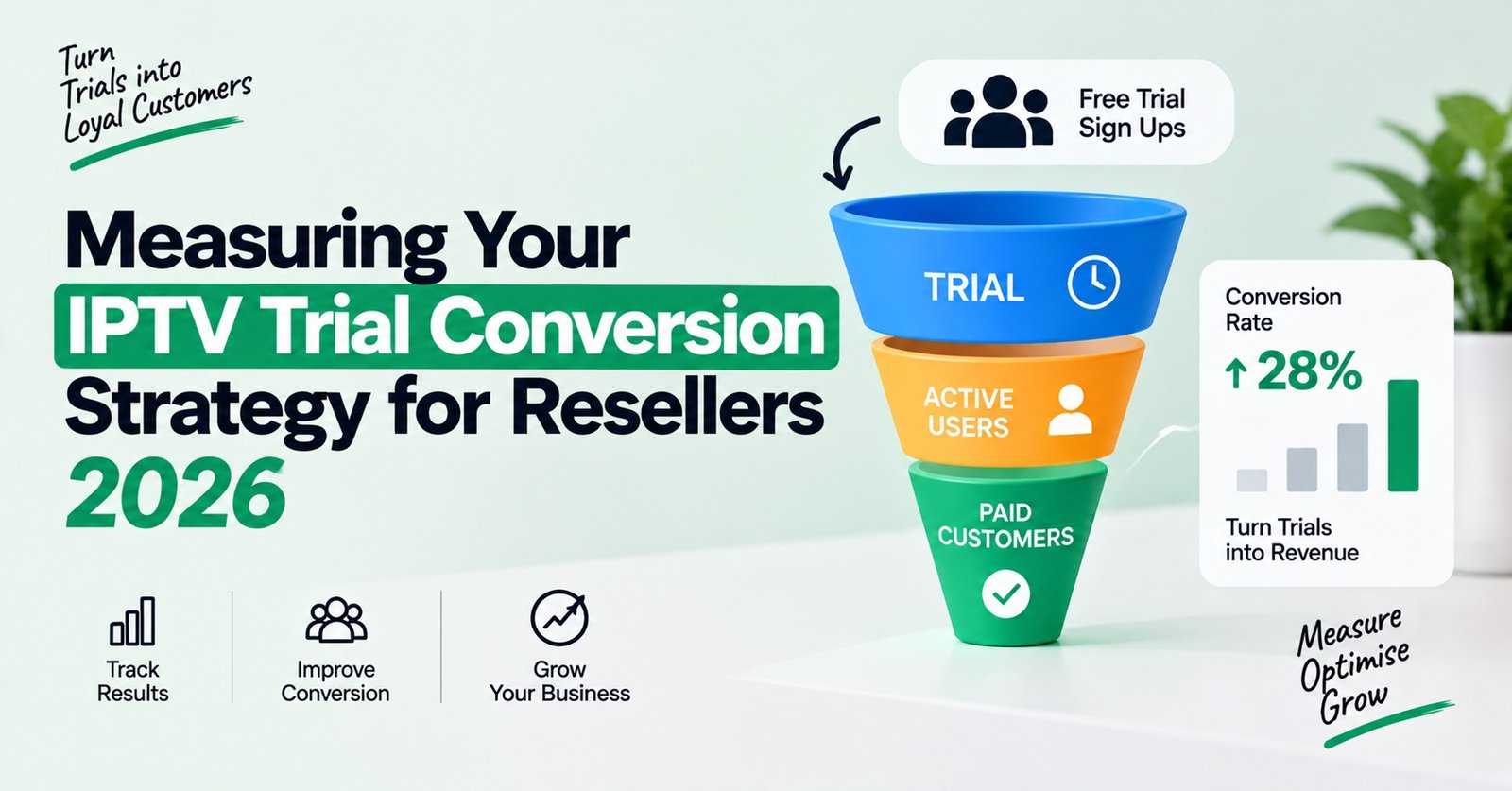

A working IPTV Trial Conversion Strategy for Resellers treats the free trial as the middle of a sale rather than the end of a test. You decide who gets a trial, make sure the first session actually works, follow up at planned moments, answer the real objection behind the “I’ll think about it”, and track where people drop out. Many trials that never convert are lost well before the final hour, usually in the first hour.
So before you cut your prices or lengthen your trials, look back at your last few unconverted users and ask one question: did they get the service playing on the screen they actually watch on? If the answer is no, the follow-up message was never going to rescue that sale. A surprising number of “too expensive” replies are really setup problems that the customer didn’t want to admit to.
Deciding Who Gets a Trial in the First Place
Handing out a trial to anyone who asks feels generous, but it spreads your time and support thin across people who were never going to buy. A short qualifying conversation before activation does two jobs at once. It filters out people collecting free access, and it gives you the information you need to make the trial succeed for the people who are serious.
The questions worth asking are simple:
- Which device will you use most, and is it the one in your main room?
- How many screens would you need if you subscribed?
- When do you actually watch, weekday evenings or mostly weekends?
- Have you used a subscription streaming service like this before?
- What are you using at the moment, and what’s frustrating about it?
The viewing-time question matters more than most IPTV panel resellers realise. A short trial started on a Tuesday morning by someone who only watches on Saturday evenings tests nothing. They’ll reach the expiry message having barely opened the app, and the decision gets made on guesswork.
The “what’s frustrating now” question gives you the objection before it arrives. If someone tells you their current setup keeps freezing, you know reliability is the measure they’ll judge you on. If they say it’s the price, you know the conversation at the end will be about value rather than quality.
Pro tip: When someone says they mainly watch at weekends, offer to schedule the trial so it starts on Friday afternoon. A trial that overlaps with real viewing habits gives the customer a genuine reason to decide.
Qualification also protects your credits and trial allowance. Where a panel limits trial lines or charges for them, one trial per verified contact is a sensible rule. People who refuse to give a working contact method, or who ask for repeated trials under different names, are rarely future customers.
Onboarding Inside the First Hour
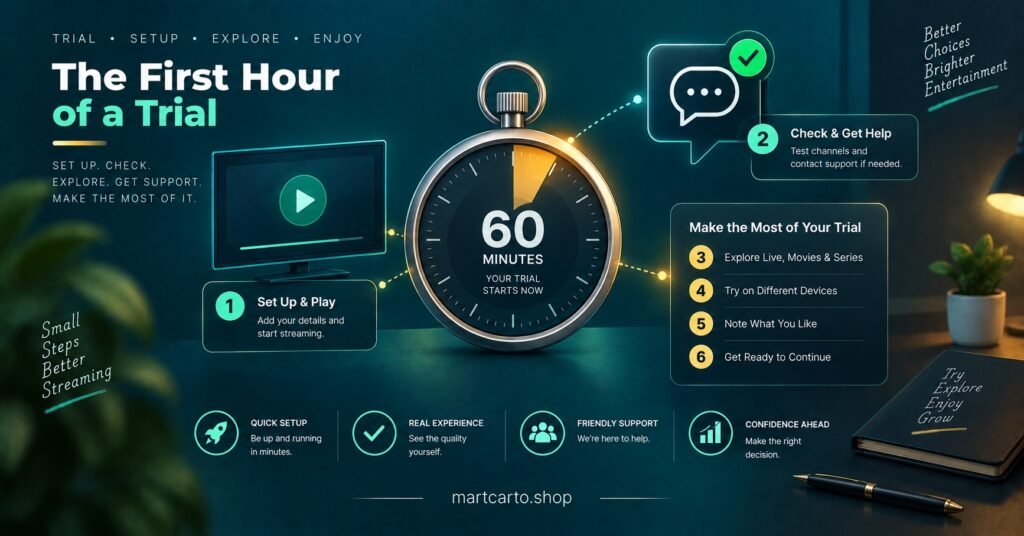
The first hour after activation is where most of the conversion work happens, even though it doesn’t look like selling. The customer has just received login details and is trying to get something working. If they struggle alone, the trial becomes a chore.
Send instructions for the exact device they named during qualification, not a general guide covering every platform. Someone on a smart TV doesn’t want to scroll past three sections about phones and streaming sticks to find their steps. Choosing the right login format for their app matters too, and this walkthrough on sending M3U and Xtream Codes login details covers which one suits which situation. Putting all the credentials in one clearly laid out message reduces copy errors and lost details.
Then confirm the first successful playback. A message sent shortly after activation asking “Is it playing on your TV now?” catches problems while the customer is still motivated to fix them. Silence at this stage often means they gave up rather than succeeded.
Once they’re in, point out one or two features they wouldn’t discover on their own, such as the programme guide, favourites, or catch-up where the service offers it. Keep this light. The aim is to show them the service fits how they watch, not to deliver a product tour.
Follow-Up Timing Across the Trial Window
Trials are usually short, often a day or two, so every message has to earn its place. The most common timing mistake is sending the offer at activation. At that point the customer hasn’t seen anything yet, and a price message reads as pressure.
A better approach is to match each message to where the customer is in the trial:
| Moment | What the message should do | What to avoid |
|---|---|---|
| Straight after activation | Confirm the login works on their device | Pricing or plan offers |
| After first real viewing session | Ask how it went and invite questions | Long feature lists |
| Shortly before expiry | Remind them of the end time and present plans | Countdown pressure or fake scarcity |
| Within a day after expiry | Ask what stopped them from continuing | Repeating the same offer |
| About a week later | One final, low-pressure check-in | Continued chasing after no reply |
The pre-expiry message is the one that converts, so time it for when the customer is likely to be watching. If they told you they watch in the evenings, a mid-morning reminder will be read on a phone at work and forgotten. Follow-up timing is only one part of the sales process, and this guide to the wider approach to selling streaming subscriptions puts it alongside pricing and plan structure.
The after-expiry message is where you learn the most. Asking a plain question such as “Was there anything that didn’t work for you?” often gets an honest answer, and that answer feeds directly into your objection handling and your measurement.
Pro tip: Write your follow-up messages once, save them in your support tool or notes, and adjust only the device and timing details for each customer. Consistent messages make it far easier to see which one is underperforming.
Answering the Objections That Come Up at the End
Objections at the end of a trial are rarely as simple as they sound. The skill is working out what the customer actually means before you respond.
“It buffered a couple of times”
Ask when and on which device. Buffering on one screen at one time points in a different direction from buffering everywhere, all evening. Wi-Fi reaching a TV at the far end of the house is a common cause, and a wired connection or a better router position can fix it. Be honest here. No streaming service is completely free of interruptions, and promising “zero buffering” sets up a complaint for next month.
“I’ll think about it”
This usually means the value wasn’t clear or something small went wrong. Ask directly and politely whether anything stood in the way. If the answer is cost, a shorter first plan is often better than a discount, because it lowers the commitment without training customers to expect price cuts at every renewal. On a credit-based panel, a single month is usually the smallest step you can offer, so it helps to understand how credit-based IPTV reseller plans work before you decide what to put on the table.
“Will it work on my other TV?”
This is a buying signal. Walk them through the second device during the conversation rather than asking them to try it alone later. If you can’t support that device properly, say so.
“How do I know you’ll still be here next month?”
Trust objections deserve straight answers. Explain how support works, how to contact you, what happens if there’s a problem, and what your refund terms are. Don’t claim licensing, approvals or guarantees you can’t back up. If the content your service offers depends on rights held by others, be clear that you only sell access from authorised sources.
Complete silence
No reply isn’t always a no. One message after expiry and one a week later is enough. Beyond that, continued chasing damages your reputation more than it wins sales.
Measuring an IPTV Trial Conversion Strategy for Resellers
Without measurement, trial conversion becomes a matter of feel, and feel tends to blame the customer. A simple spreadsheet or the notes field in your reseller dashboard is enough to start.
Track these for every trial:
- Where the trial request came from
- The device used
- Whether the customer reached first successful playback, and how long it took
- Which follow-up messages were sent and when
- The outcome, and the reason given if they didn’t convert
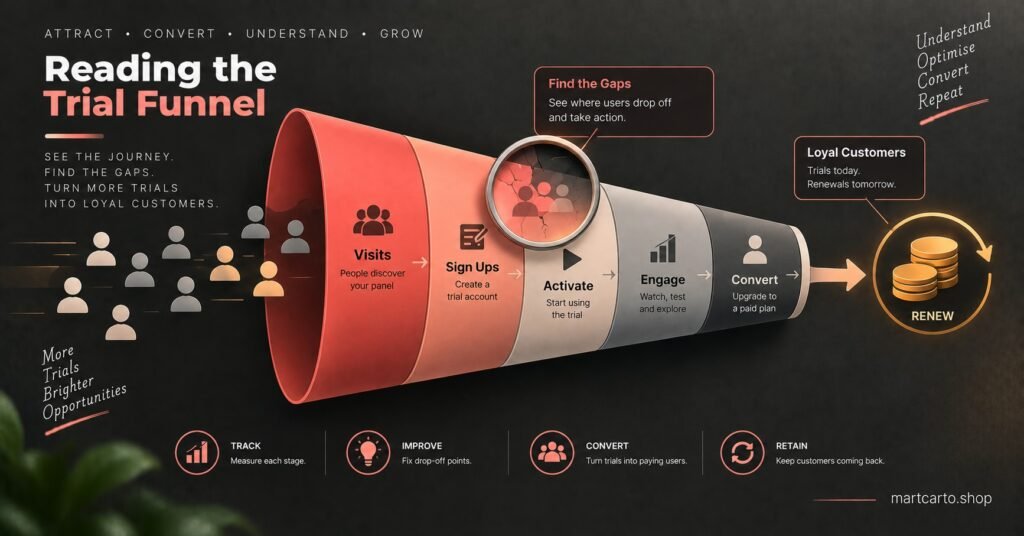
From this you can calculate the numbers that matter. The trial-to-paid rate is the obvious one, but the activation rate, meaning the share of trials that reached a working first session, is often more useful. If activation is low, your problem is onboarding, and no amount of follow-up tweaking will fix it.
Break your conversion rate down by source and by device. You may find that trials from one channel convert far better than another, or that one device type produces most of your failed setups. Both are practical findings you can act on.
Look beyond the first payment as well. A trial that converted only because of a heavy discount and then cancelled after one month cost you support time, credits and margin. Checking whether converted trial users renew at least once gives a truer picture of which approach actually works. Your panel can do some of this tracking for you, and it’s worth knowing which IPTV reseller panel features help with expiry and renewal tracking so you aren’t recording everything by hand.
Review the figures in batches, perhaps monthly, rather than reacting to each lost trial. Individual results are noisy. Patterns across a few dozen trials are worth acting on.
When Letting a Trial Go Is the Right Call
Not every trial should convert, and chasing the wrong ones costs more than it earns. Someone asking how to reach content your service doesn’t offer through authorised sources isn’t a customer you want. Neither is someone using a device you can’t support reliably, because they’ll become a monthly support ticket.
Repeat trial users are another group to let go. If the same person keeps returning under new details, they have shown you what they want, and it isn’t a subscription.
Letting these trials end cleanly keeps your data honest too. If you count every trial equally, poor-fit users drag down your conversion rate and hide what’s working with genuine prospects.
Frequently Asked Questions
How long should a trial last for a reseller?
Long enough to cover at least one real viewing session. The exact length matters less than timing; a short trial that starts when the customer actually watches is more useful than a longer one that runs while they’re at work.
Should I offer a discount when a trial ends?
Use discounts carefully. A shorter first plan often answers price hesitation without setting an expectation of reduced renewals. If you do discount, track whether those customers renew.
Is it worth offering a second trial?
Only when the first one clearly failed for a reason you have now fixed, such as a setup problem on their device. Otherwise, a second trial tends to delay the decision rather than change it.
What if a trial user never replies after expiry?
Send one message within a day and one final check-in about a week later. After that, log the trial as lost and move on.
Bringing It Together
An effective IPTV Trial Conversion Strategy for IPTV Resellers rests on a few habits: qualify before activating, make the first hour work on the customer’s real device, time follow-ups around their viewing habits, listen for the meaning behind objections, and measure activation and renewal as well as first payments. None of this guarantees every trial will convert, and some shouldn’t. Start by reviewing your last batch of lost trials against the activation question, fix whatever that reveals, and then refine your follow-up timing once the foundations are sound.
Trial Handover Checklist
- Qualifying questions asked, including main device and usual viewing times
- Trial start scheduled to overlap with real viewing
- Device-specific instructions sent with credentials in one message
- First successful playback confirmed
- Follow-up messages timed to the customer’s viewing pattern
- Objection reason recorded for every non-converted trial
- Converted trial users checked at first renewal