
An IPTV Sub-Reseller Panel is what a reseller uses to hand out a smaller, permission-limited version of their own dashboard to someone selling underneath them, without giving that person access to the whole account. The parent keeps control of the master credit pool, the pricing, and the ability to shut a sub-account down. The sub-reseller gets a scoped-down panel where they can create lines, assign bouquets and manage their own customers, but only within limits the parent has set.
Where this usually goes wrong isn’t the technology, it’s the handover. A parent reseller creates a sub-account, tops it up with credits, and assumes that’s the end of the admin work. Then a customer dispute comes in, or the sub-reseller starts undercutting the parent’s own pricing to their overlapping customer base, and there’s no permission setting or reporting trail that was ever configured to catch it. The panel can only enforce boundaries that were actually set at creation time.
How the Parent-Child Structure Actually Works
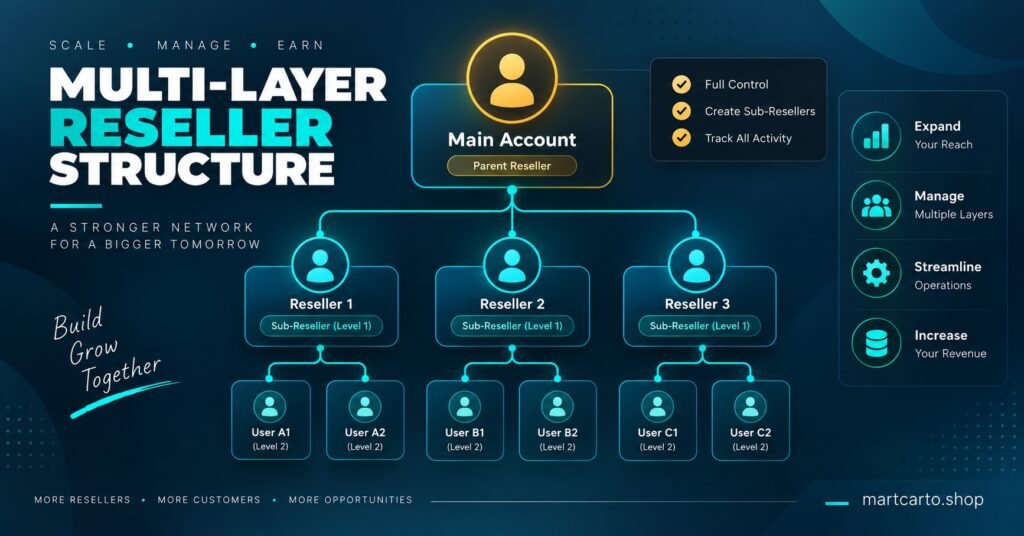
Most IPTV reseller panels, including credit-based reseller platforms like Martcarto, are built around a single master account that owns the full credit balance and can then spin off sub-accounts underneath it. Each sub-account sits in its own layer with its own login, its own visible customer list, and its own smaller credit allowance drawn from the parent’s pool.
The sub-reseller cannot see the parent’s other sub-accounts, cannot see the parent’s total remaining credits, and cannot touch billing or panel settings. What they can usually do is create customer lines, assign the bouquets that have been made available to them, and extend or suspend the lines they created themselves. It’s a working copy of the panel, scoped down to exactly what one layer needs and nothing above it.
This matters for a simple reason. If a sub-reseller’s login was ever compromised, or if the working relationship ended badly, the blast radius should stop at that one layer. A properly scoped sub-account can be suspended in seconds without touching a single line belonging to the parent’s direct customers or to any other sub-reseller.
Credit Allocation Between Layers
Credits move down the chain, not sideways. The parent transfers a fixed batch of credits into the sub-reseller’s allowance, and that sub-reseller spends from that allowance the same way the parent spends from the master pool, one credit per customer month.
A few things are worth getting right at this stage:
- Decide whether the sub-reseller’s allowance tops up automatically or has to be requested manually each time. Manual requests are slower but give the parent a natural checkpoint to review activity before handing over more stock.
- Set a floor. Many parents let a sub-account run down to zero and then simply stop functioning until the next top-up, rather than letting it borrow against future credit, which gets messy to unwind later.
- Keep a record outside the panel too, at least until you trust the reporting tab fully. A spreadsheet that logs each transfer date and amount catches discrepancies faster than trying to reconstruct history from an activity log after the fact.
Pro tip: Transfer credits in smaller, more frequent batches to a new sub-reseller for the first month or two. It’s easier to spot a problem, whether that’s mispriced customer lines or unusual churn, when you’re checking in every week rather than finding out three months in that half the allowance went to lines that never converted to paying customers.
IPTV Sub-Reseller Panel: Where Permissions Split From Ownership
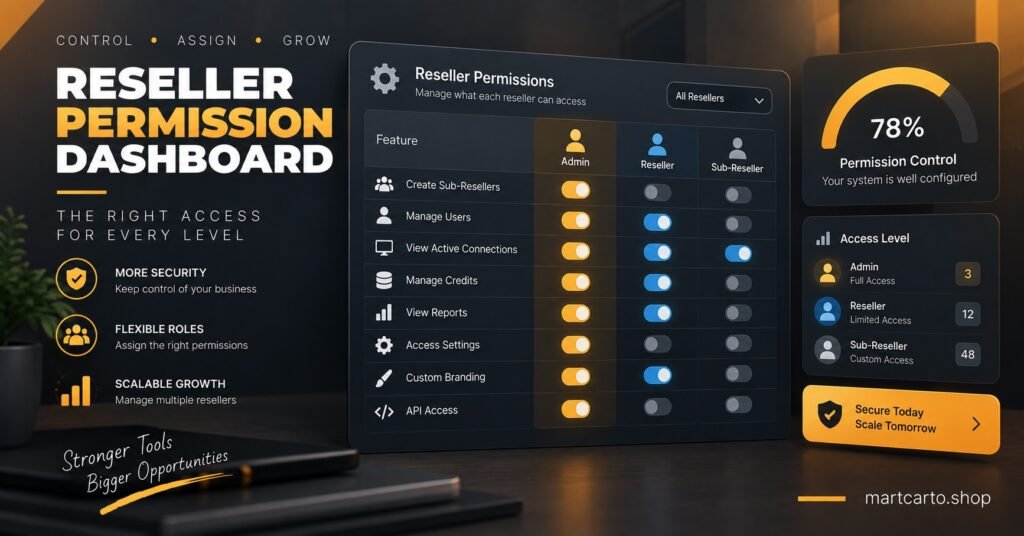
The permission layer is what actually separates an IPTV Sub-Reseller Panel from just handing someone a spare login. Ownership of the master account, the billing relationship with the platform, and the ability to create further sub-accounts all stay with the parent. What gets delegated is a defined set of actions.
| Permission area | Typically held by parent | Typically delegated to sub-reseller |
|---|---|---|
| Master credit balance and top-ups | Yes | No |
| Creating and pricing sub-accounts | Yes | No |
| Creating customer lines within their own allowance | Also available | Yes |
| Assigning approved bouquets | Sets which bouquets are available | Picks from what’s approved |
| Suspending their own customer lines | Yes | Yes |
| Viewing other sub-resellers’ data | Full visibility | No |
The split isn’t identical across every panel provider, so this is a question worth asking directly before committing to a supplier: can permissions be set per sub-account, or is it all-or-nothing? A platform that only offers one flat level of sub-account access forces every sub-reseller into the same rules, which rarely fits a business with a mix of trusted long-term partners and brand new ones you’re still evaluating.
Margin Control Without Undercutting Yourself
This is the part parents underestimate most. Once a sub-reseller has their own panel and can set their own customer pricing, there’s nothing structurally stopping them from pricing below what the parent charges their own direct customers, particularly if both are competing for similar audiences online.
A few practical guards help here:
- Agree pricing bands in writing before handing over access, not as a verbal understanding. What counts as undercutting needs to be specific enough that both sides can point to the same number later.
- Watch the margin, not just the sale price. A sub-reseller buying credits at a wholesale rate and selling slightly cheaper than the parent might still be profitable for both sides, so blanket price-matching rules aren’t always the right fix.
- Review renewal rates by sub-account periodically, not just total credit spend. A sub-reseller who burns through credits fast but has poor customer retention is a different risk to one who moves slower but keeps customers for years.
Pro tip: If two sub-resellers are likely to end up targeting the same regional customer base, say them anything, agree a rough geographic or channel-package split early. It costs nothing to raise before there’s a conflict and saves a genuinely awkward conversation later.
What Reporting Should Actually Show You
A parent account needs enough visibility into each sub-reseller’s layer to catch problems, without needing to micromanage every line they create. In practice that means being able to see, at minimum, how many active customer lines each sub-account is running, how quickly their allowance is being spent, and which bouquets are getting used.
What it shouldn’t require is opening a support ticket every time you want that picture. If the only way to check a sub-reseller’s activity is to ask them directly, the reporting layer isn’t doing its job, and you’re relying on the sub-reseller to self-report anything that might reflect badly on them.
Reliable IPTV reseller panels usually surface this in an activity log or reporting tab rather than burying it behind a support request, which is one of the more useful things to check during a trial period before committing to a supplier long term.
Common Mistakes When Setting Up Sub-Reseller Access
The most frequent one is treating the sub-account creation step as a one-off task rather than an ongoing relationship. Access gets granted, and then nobody revisits the permission settings again until something goes wrong. A sub-reseller who started as a small, cautious test account eighteen months ago might now be running a genuine volume of customers on permissions that were never reviewed for that scale.
The second is unclear ownership of the customer relationship if a sub-reseller stops trading. If a sub-account goes quiet, does the parent inherit those customer lines, or do they simply expire when the credit allowance runs out? This should be settled before it happens, not worked out under pressure when a sub-reseller disappears mid-renewal cycle for their customers.
Setting Up a New Sub-Reseller: A Practical Sequence
There’s no single correct order, but a workable sequence looks something like this. Create the sub-account and set its permission scope first, before transferring any credits at all. Assign a starting bouquet list based on the region or customer type the sub-reseller has told you they’re targeting. Send over a small initial credit batch rather than a large one. Agree pricing bands and review timing in writing. Then check back in within the first two weeks, not the first two months, while the account is still small enough that a mistake is easy to fix.
Frequently Asked Questions
Can a sub-reseller create their own sub-resellers underneath them?
Most platforms don’t allow this by default. Extending the hierarchy another layer down is usually a decision the top-level parent has to approve, since each extra layer adds more accounts the parent is ultimately responsible for if something goes wrong.
What happens to a sub-reseller’s customer lines if their credits run out mid-month?
This depends on the panel provider’s own rules rather than being universal, but generally an expired allowance stops new lines being created without necessarily touching customers who are already active until their individual expiry date arrives. It’s worth confirming this exact behaviour with whichever platform you’re using rather than assuming.
Should every sub-reseller get the same bouquet list?
Not necessarily. If sub-resellers are targeting different regions or customer types, giving them a shared bouquet list they didn’t ask for just adds clutter to their panel and can lead to mismatched pricing conversations with customers who see options that were never actually meant for them.
How much should a parent charge a sub-reseller versus a direct customer?
There’s no fixed formula, but the sub-reseller’s credit rate needs enough margin built in that they can still price competitively to their own customers and make a reasonable return. If that margin is too thin, sub-resellers tend to churn out of the arrangement within a few months.
Sub-Reseller Checklist
- Permission scope agreed and set before any credits are transferred
- Starting credit batch kept small for the first month
- Pricing bands agreed in writing, not verbally
- Reporting or activity log access confirmed as visible without a support ticket
- Ownership of customer lines settled in case the sub-account goes inactive
- Review date set for the first check-in, ideally within two weeks
Getting the layers right on an IPTV Sub-Reseller Panel comes down to deciding, before any access is handed over, exactly what a sub-reseller can see, spend and price, and building in a way to check on that regularly rather than assuming the panel’s default settings will catch every problem on their own. The technology handles the mechanics of splitting credits and permissions. The judgement calls around pricing bands, ownership of customers, and how much visibility to keep over each layer are still down to the parent to set deliberately, ideally before the first sub-account is created rather than after the first dispute.